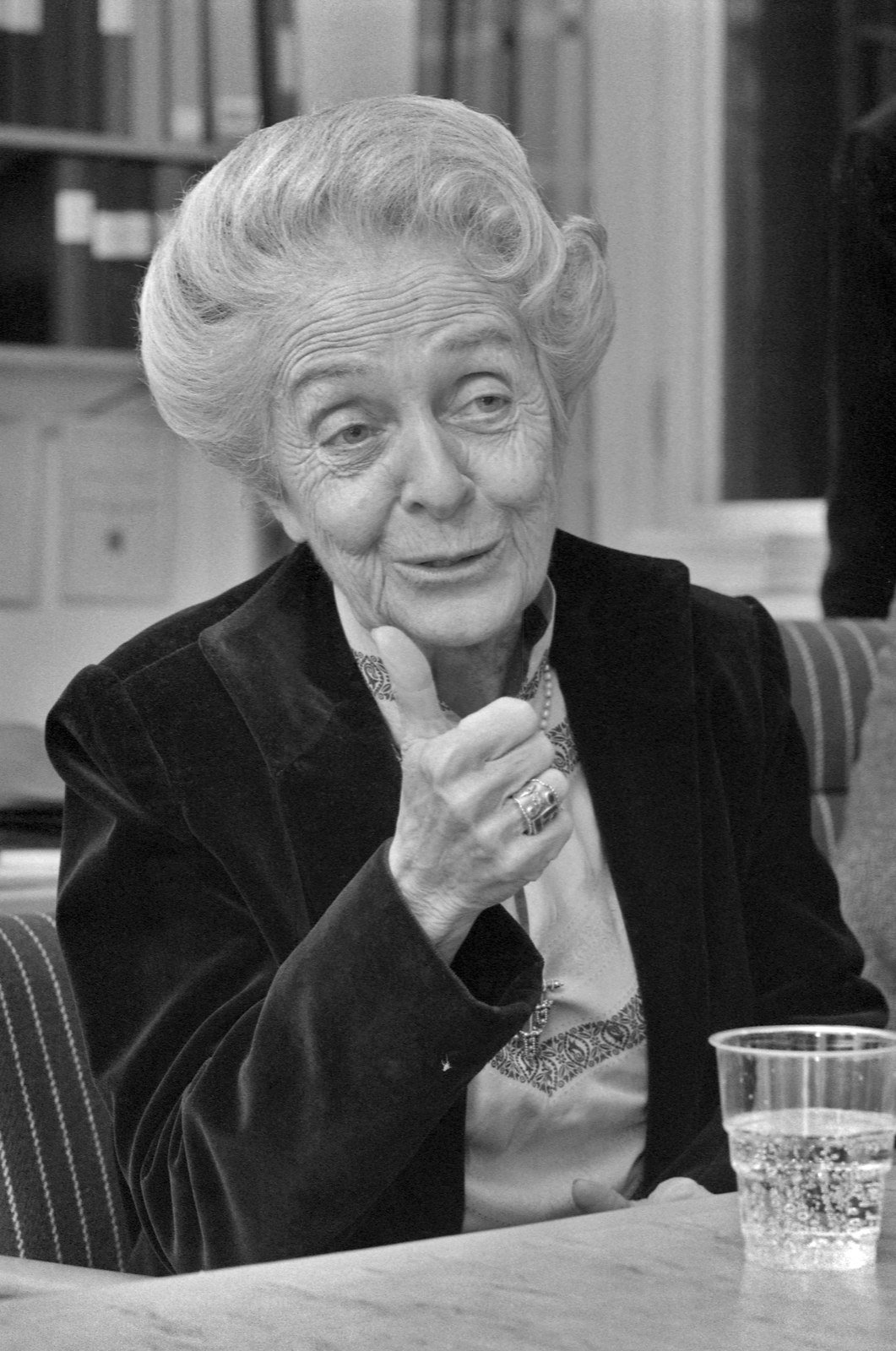
Rita Levi-Montalcini was born in 1909 in Turin, Italy, to a Jewish family, and studied medicine despite her father's objection that a woman's place was in the home. When racial laws under Fascism barred Jews from practicing medicine and academia in Italy in 1938, Levi-Montalcini lost her university position, so she built a makeshift laboratory in her bedroom to continue her research secretly during World War II.
Using chick embryos and simple tools like sewing needles, Levi-Montalcini studied nerve fiber growth, and noticed that certain tissue from mouse tumors triggered unusually dense growth of nearby nerves. After the war, she moved to the United States to work with biologist Stanley Cohen at Washington University, where together they isolated the substance responsible for this stimulation, naming it «nerve growth factor» (NGF).
An Active Mind for Over a Century
The discovery of nerve growth factor opened an entirely new field of research into the chemical factors that regulate cell growth and differentiation, becoming foundational to understanding numerous neurological diseases and tumors. Levi-Montalcini won the 1986 Nobel Prize in Medicine jointly with Cohen, and continued her scientific work and advocacy for women's education until age 103, becoming the first Nobel laureate to live past 100.