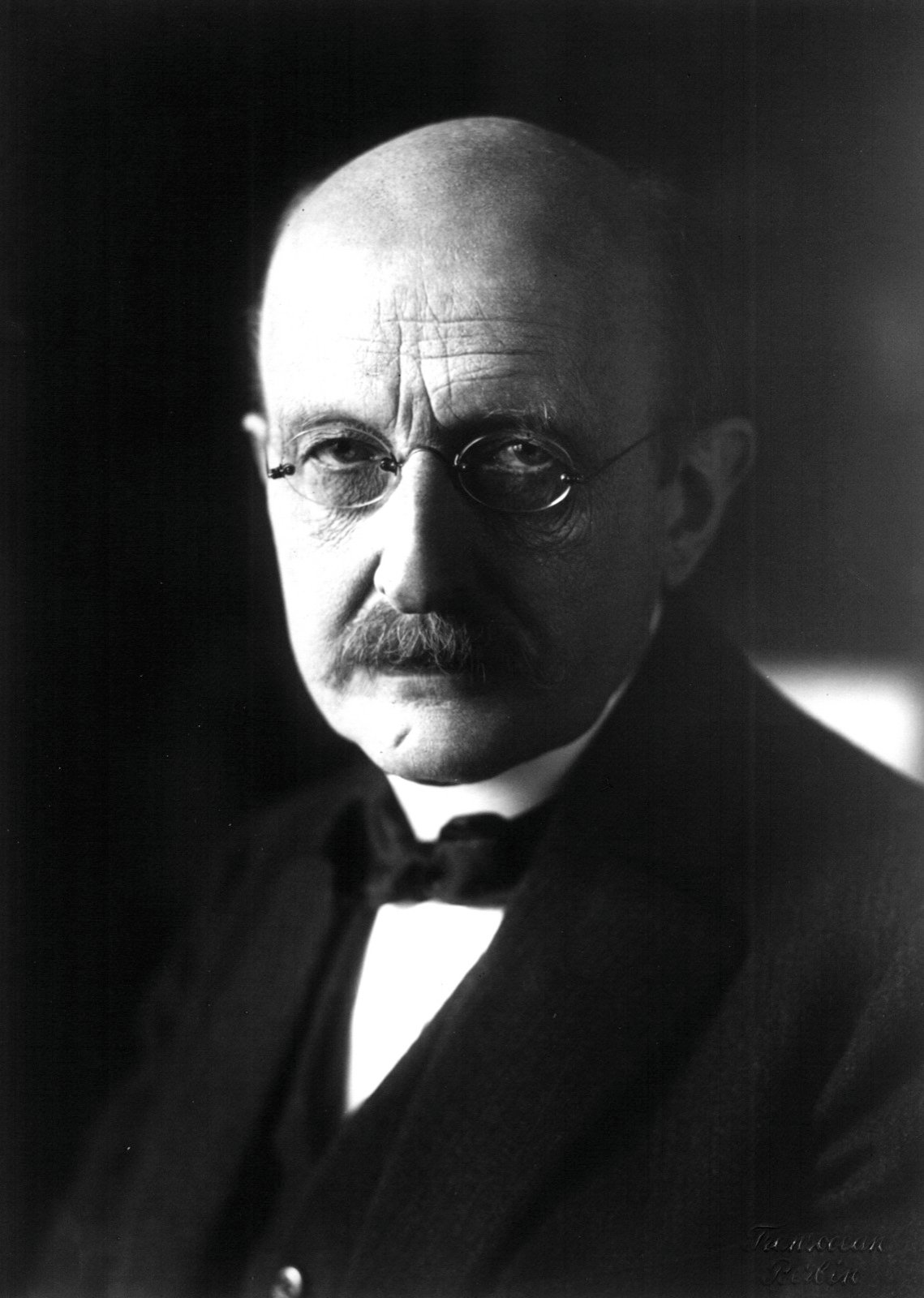
Max Planck was born in 1858 in Kiel, Germany, into a distinguished academic family, and showed early talent in both music and mathematics before committing to physics, despite one professor's advice that most fundamental discoveries in the field had already been made.
In 1900, while researching black-body radiation, Planck found that energy is not emitted or absorbed continuously as previously believed, but in small discrete units he called “quanta,” introducing the physical constant that bears his name, Planck's constant. This discovery, whose revolutionary implications even Planck himself did not initially grasp, became the cornerstone of quantum mechanics, one of the most important branches of modern physics.
From classical physics to the quantum world
Planck won the 1918 Nobel Prize in Physics for this achievement, which transformed humanity's understanding of matter and energy at the subatomic scale. He also endured great personal tragedy through the two World Wars, yet remained until his death in 1947 a leading scientific and moral figure in Germany.
- Discovered the quantum nature of energy in 1900
- Introduced the physical constant that bears his name
- Laid the foundation for quantum mechanics
- Won the 1918 Nobel Prize in Physics