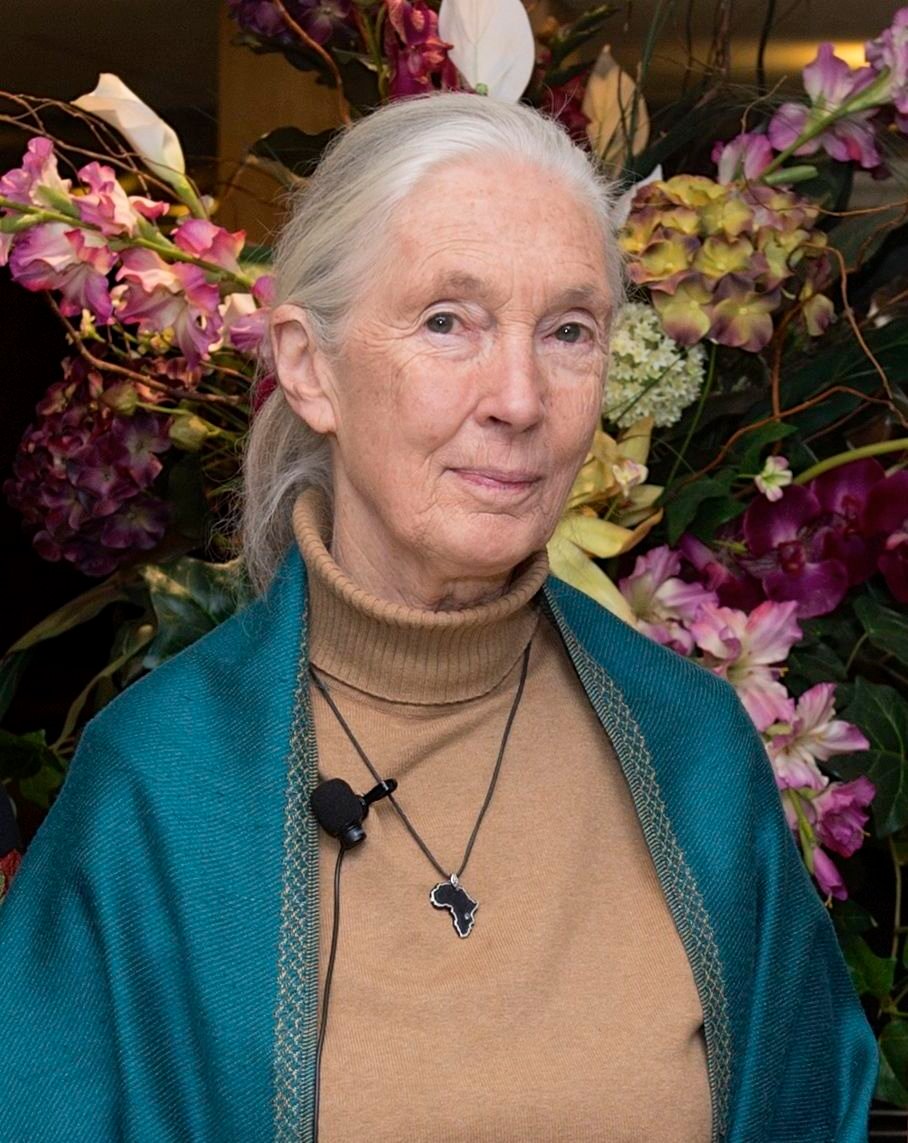
Jane Goodall was born in 1934 in London and was fascinated by animals from childhood, without formal university training in biology. She traveled to Tanzania in 1957 and met the renowned paleoanthropologist Louis Leakey, who believed her lack of academic preconceptions made her ideal for observing chimpanzees in their natural habitat. In 1960 she established a research station at Gombe Stream, beginning one of the longest continuous field studies in the history of zoology.
Within months of patient observation, Goodall noticed a chimpanzee she named David Greybeard stripping leaves from twigs and using them to fish termites from their mounds. It was the first scientific documentation of tool-making and tool-use by a non-human animal, prompting Leakey's famous remark that science must now redefine tool, redefine man, or accept chimpanzees as human.
Scientific Legacy
Goodall also documented the complex social and emotional lives of chimpanzees, including family bonds and war-like conflicts between groups. She founded the Jane Goodall Institute in 1977 to protect chimpanzees and their habitats, and launched the Roots & Shoots program for environmental education among young people worldwide. Appointed a United Nations Messenger of Peace, she continued traveling and lecturing on conservation until her death in 2025 at age 91.