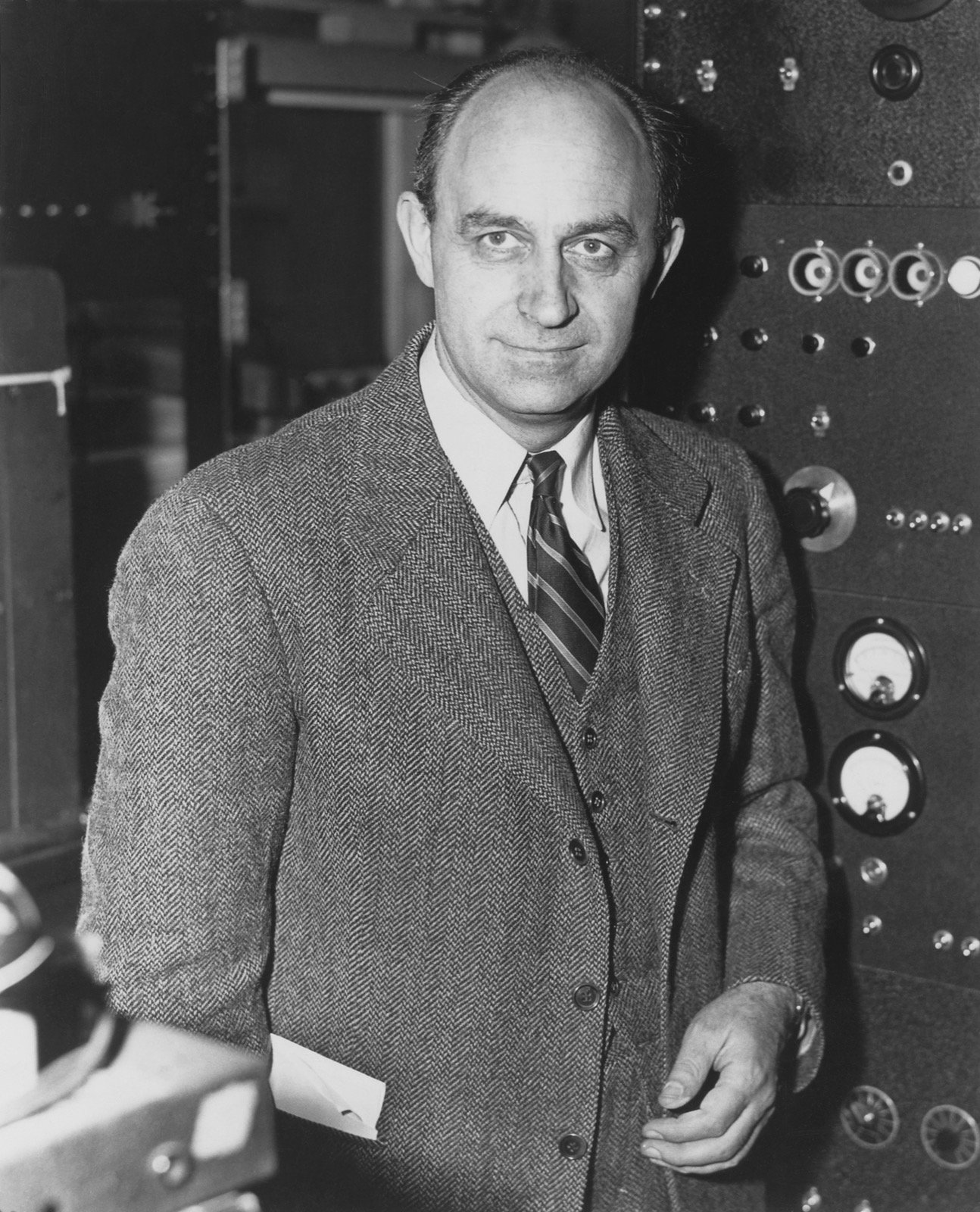
Enrico Fermi was born in 1901 in Rome, Italy, and earned his PhD in physics from the University of Pisa in 1922. He emerged early as one of the rare scientists equally skilled in theoretical and experimental physics, and in the early 1930s developed the theory of beta decay that explained the weak nuclear interaction.
Fermi was awarded the 1938 Nobel Prize in Physics for his research on neutron-induced radioactivity, and used his trip to Stockholm to accept the prize as an opportunity to flee Fascist Italy with his family to the United States. In Chicago in 1942, he led the team that built «Chicago Pile-1», history's first nuclear reactor, achieving the first self-sustaining controlled fission chain reaction.
Scientific Legacy
Fermi contributed to the Manhattan Project's development of the atomic bomb during World War II. After the war he continued research in particle physics and cosmic rays at the University of Chicago. In recognition of his contributions, the chemical element «fermium» and the Fermi National Accelerator Laboratory (Fermilab) were named after him. He died in 1954 at age 53.