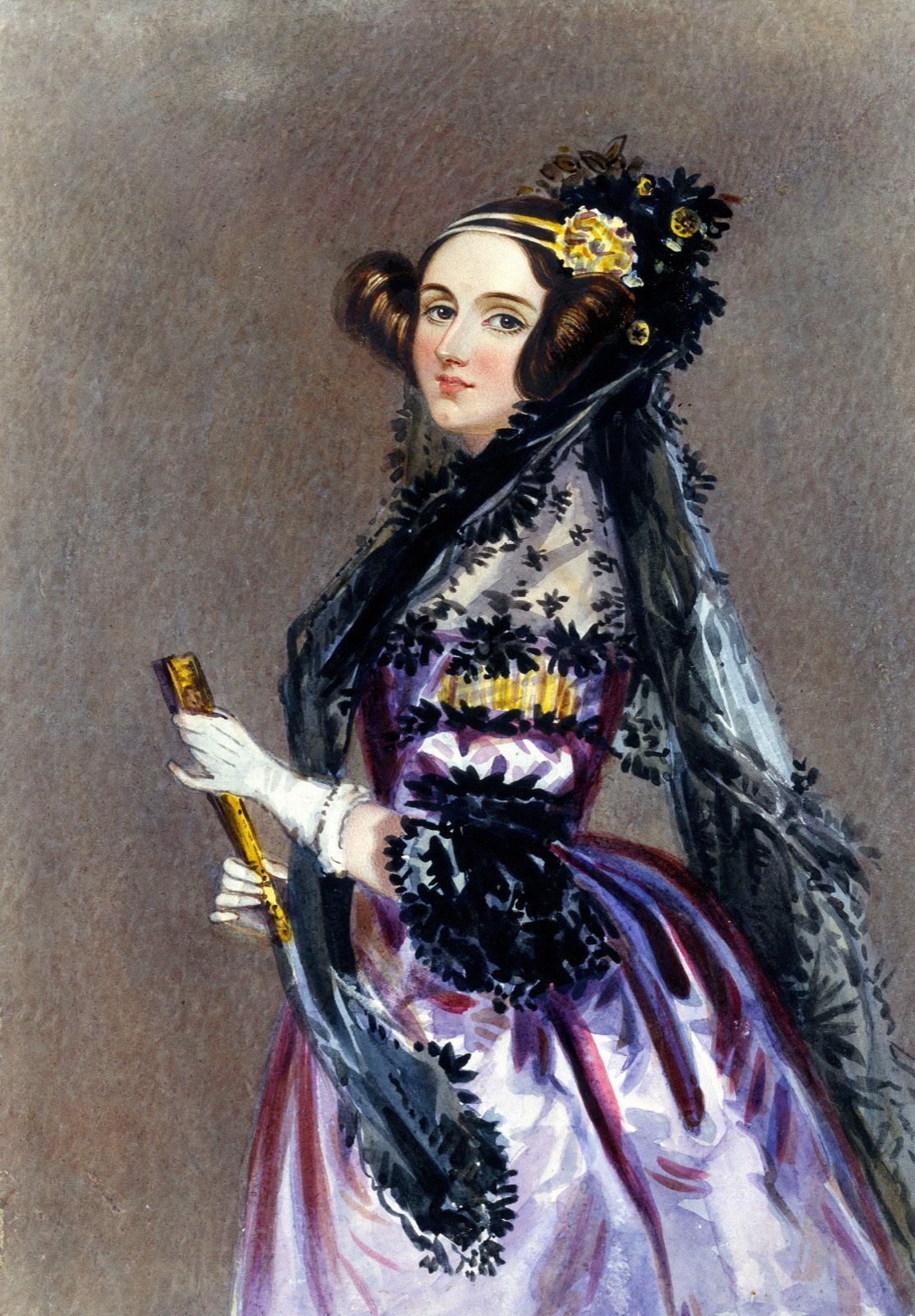
Ada Lovelace was born in 1815 in London, the only legitimate child of the famous poet Lord Byron. Her mother insisted on an intensive education in mathematics and logic from an early age, fearing Ada might inherit her father's poetic temperament, so Ada grew up blending mathematical rigor with a vivid imagination she called “poetical science.”
As a young woman, Lovelace met the mathematician Charles Babbage and learned of his ambitious “Analytical Engine,” a mechanical device designed to be history's first programmable computer. Asked to translate a French article about the machine, she added extensive notes far longer than the original text, including a description of an algorithm to compute Bernoulli numbers—now regarded as the first computer program in history.
A vision a century ahead of its time
Lovelace did more than describe how the machine worked; she predicted that computers could one day go beyond numerical calculation to process symbols, music, and images—a vision that would not be realized for more than a hundred years. She died in 1852 at age 36, and the Ada programming language was named in her honor.
- Wrote the first computer algorithm in history
- Predicted computers could process more than numbers
- Collaborated with Charles Babbage on the Analytical Engine
- Has the Ada programming language named after her