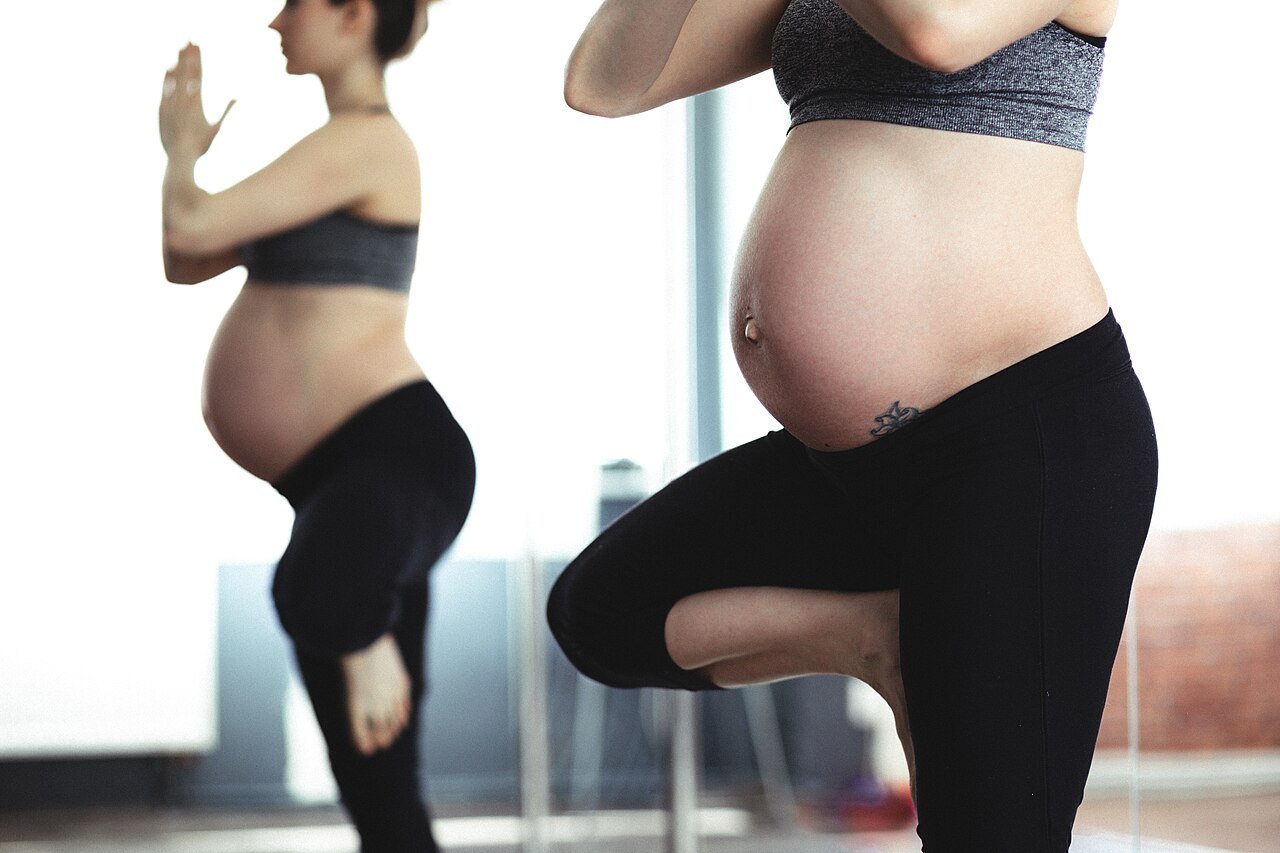
Holding your breath or breathing fast and tense during a contraction increases your sense of pain and drains your energy for no benefit. Steady, mindful breathing, on the other hand, helps your body relax as much as possible amid the pain, and keeps your muscles and baby well-oxygenated throughout labor.
Common breathing patterns
- Slow, deep breathing: a long inhale through the nose for four counts, then a longer exhale through the mouth for six to eight counts — useful at the start of contractions and between them.
- Light, rapid breathing: short, light breaths through the mouth at the peak of a strong contraction, helping you ride out the moment without holding your breath.
- Controlled exhale while pushing: instead of holding your breath entirely, a long, controlled exhale while pushing, guided by your midwife or doctor in the moment.
How do you practice beforehand?
Practice these patterns daily in the final weeks, even for just a few minutes, until they become an automatic response when you need them. Ask your partner to practice with you — having someone remind you to breathe during labor itself makes a real difference when it's hard to focus.
Remember, the goal isn't “perfect” breathing — it's a tool that helps you feel more in control amid an experience that can be quite intense. It's fine if you forget the right pattern at the peak of a contraction; your delivery team will gently guide you, and what matters is that you're not alone on this journey.