Moroccan Chicken Tagine with Olives and Preserved Lemon
Jul 1, 2026·20 views
لا يوجد تقييم بعد — كن أول من يقيّم
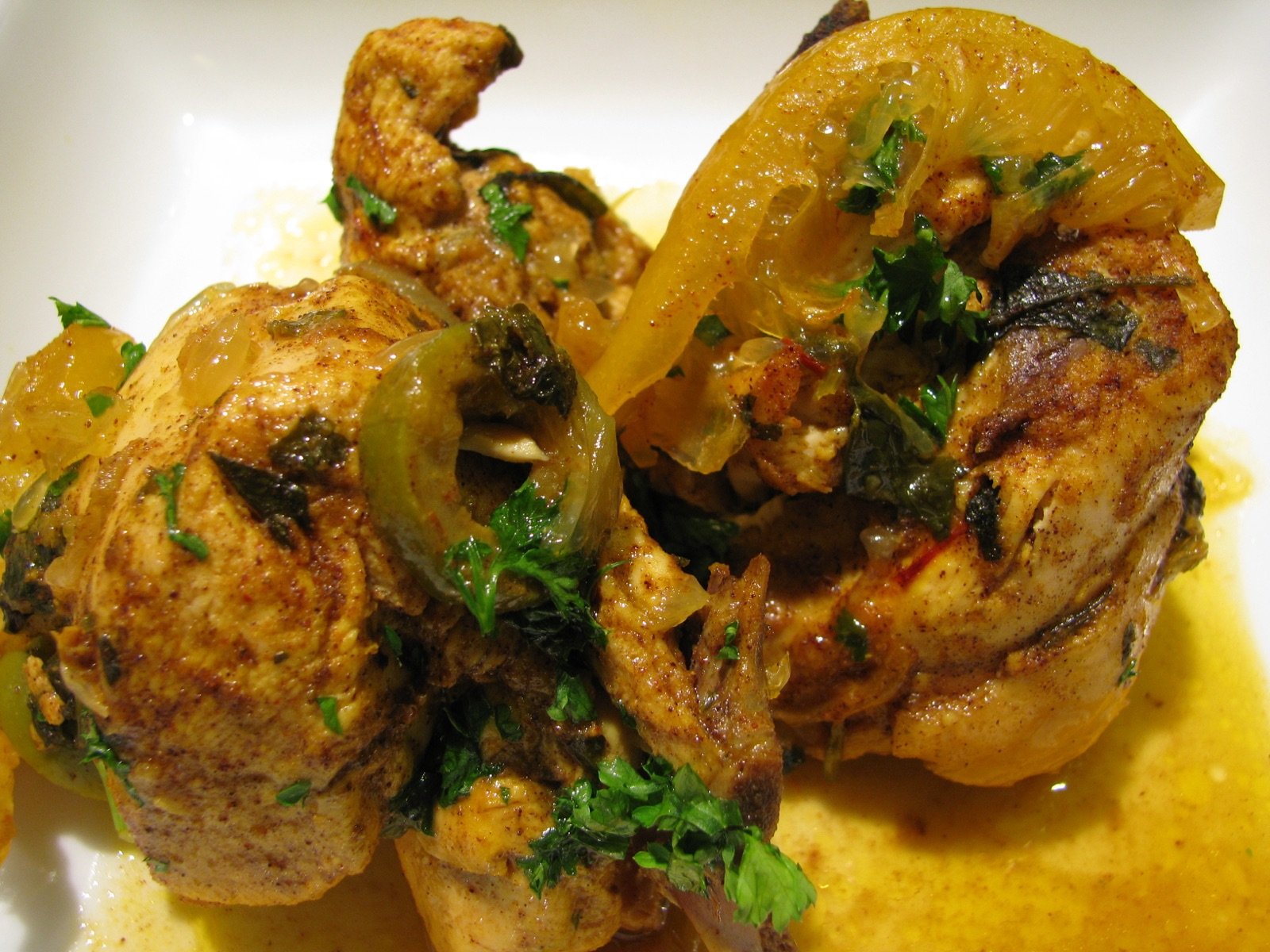
Wikimedia Commons / Foodista / CC BY 2.0
Slow-cooked chicken with saffron, ginger, olives, and preserved lemon — a classic Moroccan dish balancing tang and aromatic spice.
التحضير25 د
الطهي70 د
الحصص4
الصعوبةمتوسط
سعرات390
المقادير
خطوات التحضير
In the base of a tagine or a wide heavy pot, drizzle the olive oil and scatter the chopped onion as a base layer.
Arrange the chicken pieces over the onion, then add the garlic, saffron, ginger, turmeric, cinnamon stick, and the tied bundle of cilantro and parsley.
Add water or stock until it reaches about halfway up the chicken, cover the pot, and let it simmer on very low heat for 45 minutes.
Add the olives and quartered preserved lemons, and continue cooking for another 15-20 minutes until the chicken is fully tender and the sauce has thickened.
Taste the sauce and adjust salt (note that preserved lemon and olives are naturally salty), then remove the cinnamon stick and herb bundle before serving.
Serve the tagine hot straight from the cooking vessel with Moroccan bread for dipping into the sauce.
نصيحة
Rinse the preserved lemon well and remove the inner pulp if you prefer a milder, less tangy flavor.
Cooking on very low heat for longer is the secret to a great tagine — rushing prevents the chicken from deeply absorbing the flavors.
Tagine refers both to the cone-shaped clay pot and the dish cooked inside it, a cornerstone of Moroccan cuisine. Chicken tagine with olives and preserved lemon is one of its most famous versions, combining the distinctive tangy flavor of preserved lemon and salty olives with the warmth of Moroccan spices like saffron, ginger, and turmeric.
Tagine relies on slow cooking over low heat, allowing the chicken to gradually absorb the flavors while staying tender, as the sauce thickens from the steam trapped under the pot's signature conical lid.
This dish is a staple of everyday Moroccan tables and celebrations alike, traditionally served with Moroccan bread (khobz) for dipping into the fragrant sauce, or sometimes alongside couscous.



💬 التعليقات (0)
لا توجد تعليقات بعد — كوني أول من يعلّق!