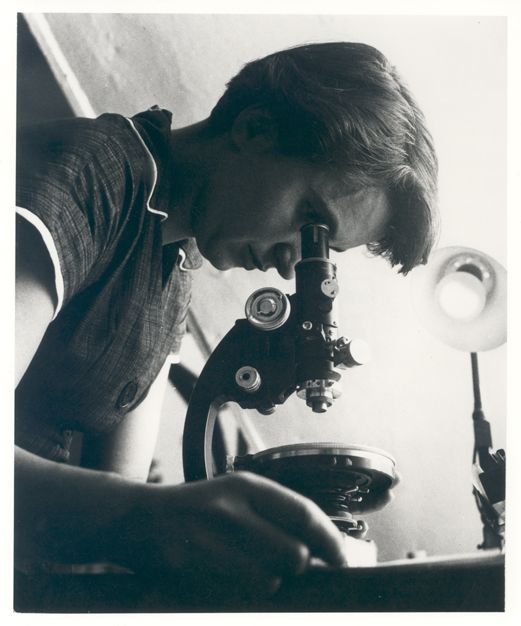
Rosalind Franklin was born in 1920 in London to a well-off Jewish family and showed remarkable talent in science and mathematics from a young age. She studied physical chemistry at Cambridge and later developed exceptional expertise in X-ray diffraction, a technique for studying the molecular structure of materials.
While working at King's College London in the early 1950s, Franklin captured precise X-ray images of DNA, most famously “Photo 51,” which clearly revealed the molecule's double-helix structure. Without her full knowledge or consent, this image was used by James Watson and Francis Crick to build their celebrated 1953 model of DNA's structure—a discovery that forever transformed molecular biology.
Belated recognition of a pivotal contribution
Franklin went on to conduct pioneering research on the structure of the tobacco mosaic virus and other plant viruses before dying of ovarian cancer in 1958 at just 37. Her crucial role in uncovering DNA's structure was only fully recognized after her death, and she has since become an emblem of women in science who went unrecognized in their own time.
- Captured “Photo 51,” revealing DNA's double-helix structure
- Mastered X-ray diffraction for biological molecules
- Conducted pioneering research on the tobacco mosaic virus
- Later recognized as pivotal to molecular genetics