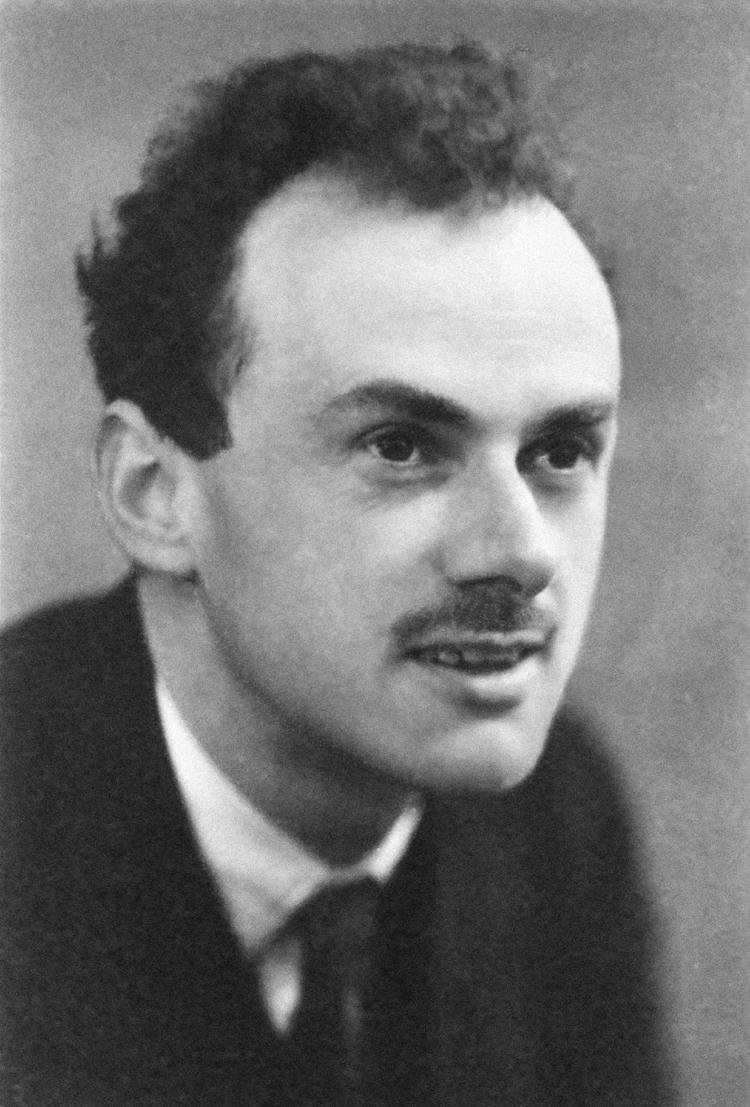
Paul Dirac was born in 1902 in Bristol, England, and initially studied electrical engineering at the University of Bristol before turning to mathematics and then theoretical physics at Cambridge. He was known for his extreme mathematical precision and sparse speech, so much so that colleagues jokingly measured a rare unit of talkativeness as «a Dirac».
In 1928 Dirac published an equation bearing his name that unified quantum mechanics with special relativity to describe the electron's behavior. The equation contained strange mathematical solutions with negative energy, which Dirac boldly interpreted as predicting a particle identical to the electron in mass but opposite in charge — what became known as «antimatter».
Scientific Legacy
Dirac's prediction was confirmed in 1932 when Carl Anderson experimentally discovered the positron, the electron's antiparticle. Dirac shared the 1933 Nobel Prize in Physics with Erwin Schrödinger. He continued his research in quantum mechanics and relativity until his death in 1984, leaving his equation as one of the most profound in the history of physics.