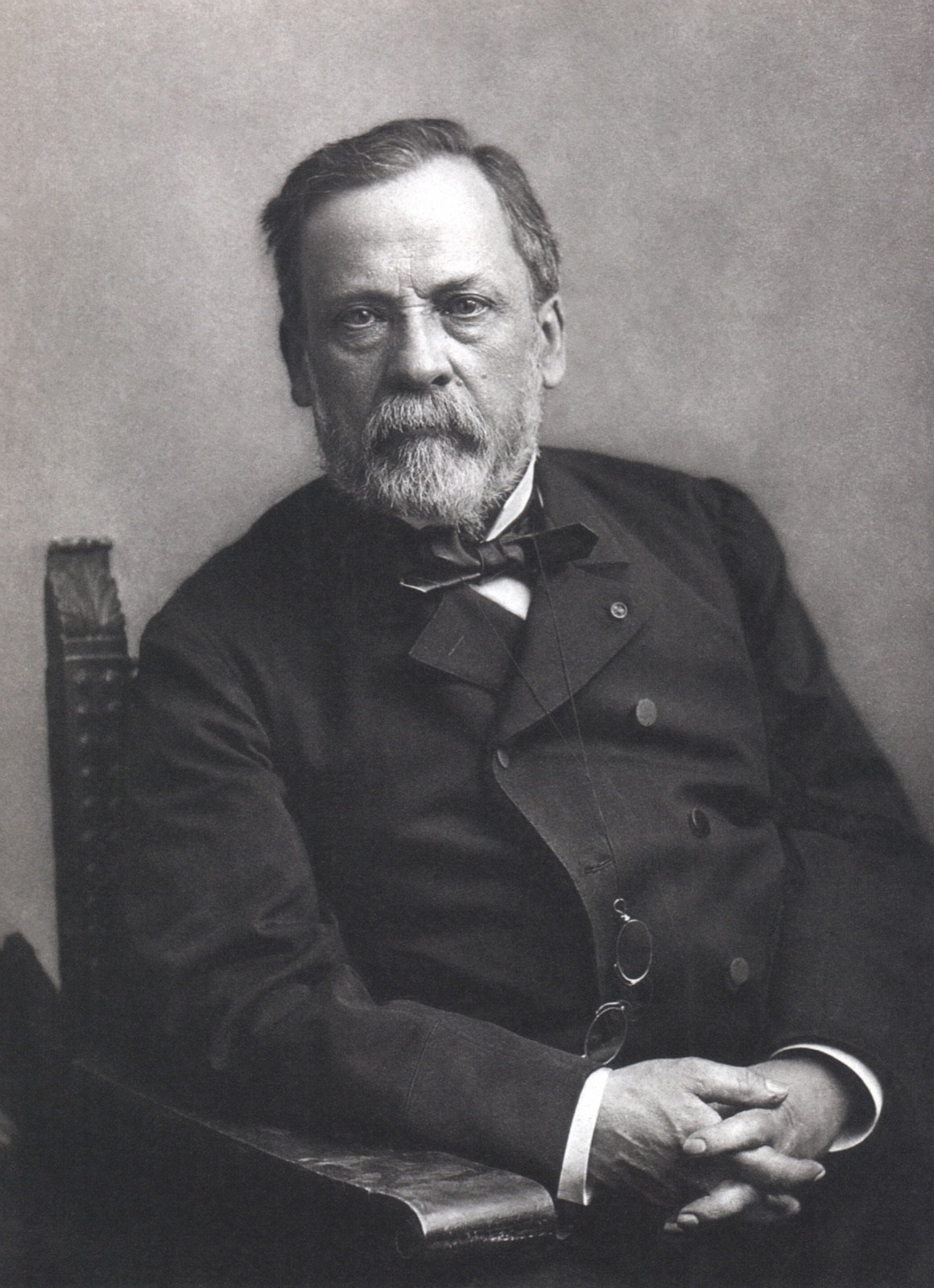
Louis Pasteur was born in 1822 in Dole, France, and trained as a chemist before becoming one of history's greatest microbiologists. He began his career researching fermentation and crystals before turning to the study of microorganisms and their role in disease, a shift that would transform both medicine and the food industry.
Pasteur proved that microorganisms cause fermentation and spoilage, disproving the then-dominant theory of spontaneous generation. He then developed “pasteurization,” a heating process that kills harmful microbes in milk and beverages and remains in use worldwide today. His work also laid the foundations of germ theory, explaining how infections spread and cause disease.
A lifesaver through vaccines
Pasteur crowned his career by developing vaccines against deadly diseases, most notably the rabies vaccine in 1885 and an anthrax vaccine, saving countless lives in the process. He also founded the Pasteur Institute in Paris, which remains one of the world's leading centers for medical research.
- Proved microorganisms cause fermentation and disease
- Invented pasteurization to sterilize food and drink
- Developed vaccines for rabies and anthrax
- Founded the Pasteur Institute for medical research