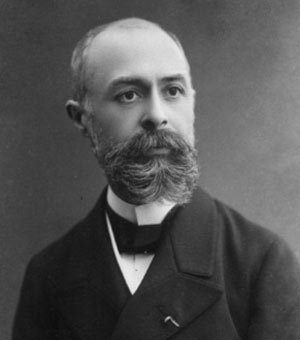
Henri Becquerel was born in 1852 in Paris, France, into a family of scientists spanning three generations studying phosphorescence and photoluminescence. Becquerel continued this family interest, investigating how certain materials emit light after exposure to sunlight.
In 1896, while studying uranium salts and their possible connection to the newly discovered X-rays, Becquerel accidentally noticed that a photographic plate stored in a dark drawer next to a sample of potassium uranyl sulfate had become fogged, despite no exposure to light. He realized the sample was emitting its own radiation without any external energy source.
Scientific Legacy
This discovery marked the birth of the science of radioactivity, later advanced by Pierre and Marie Curie, who worked in Becquerel's laboratory. In recognition of this foundational discovery, Becquerel shared the 1903 Nobel Prize in Physics with the Curies, and the unit for measuring radioactivity, the «becquerel», was named in his honor. He died in 1908.