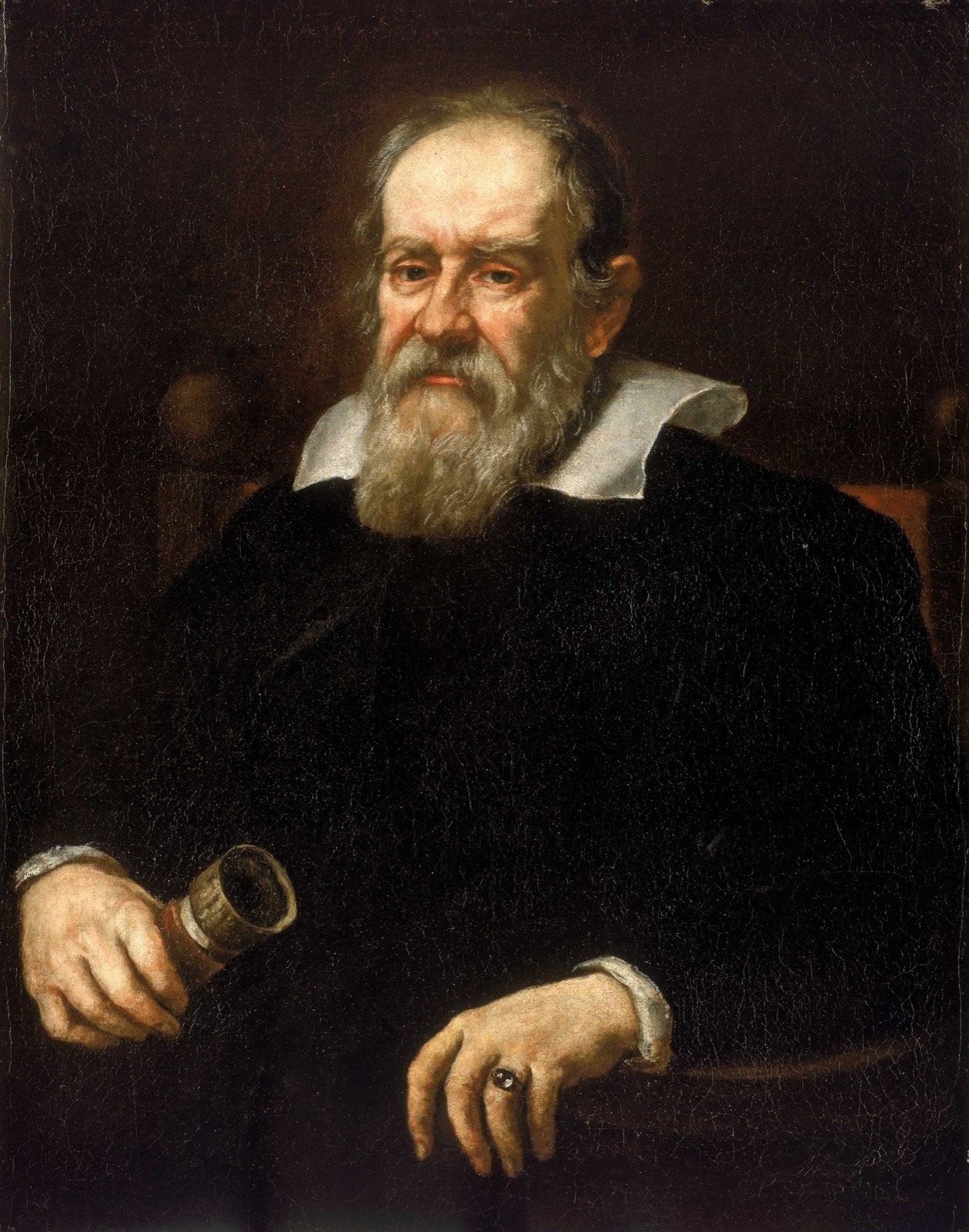
Galileo Galilei was born in Pisa, Italy, in 1564, at the dawn of Europe's scientific revolution. He initially studied medicine at the University of Pisa before turning to mathematics and astronomy, eventually becoming one of the central figures who reshaped humanity's understanding of the universe.
Building on earlier designs, Galileo constructed a powerful telescope and turned it skyward, discovering the four largest moons of Jupiter, the phases of Venus, and the rugged terrain of the Moon. These observations offered strong support for the Copernican, sun-centered model of the solar system. His outspoken defense of this view brought him into conflict with the Catholic Church; in 1633 he was tried, forced to recant publicly, and spent his final years under house arrest.
A lasting scientific legacy
Beyond astronomy, Galileo made pioneering contributions to physics through his studies of falling bodies and pendulums, laying mathematical groundwork that later informed Newton's laws of motion. He is often called the “father of modern science” for insisting that knowledge must rest on observation and experiment rather than authority alone.
- Built and refined a powerful astronomical telescope
- Discovered Jupiter's four largest moons, now called the Galilean moons
- Provided observational evidence supporting the heliocentric model
- Established foundational principles of motion and modern physics