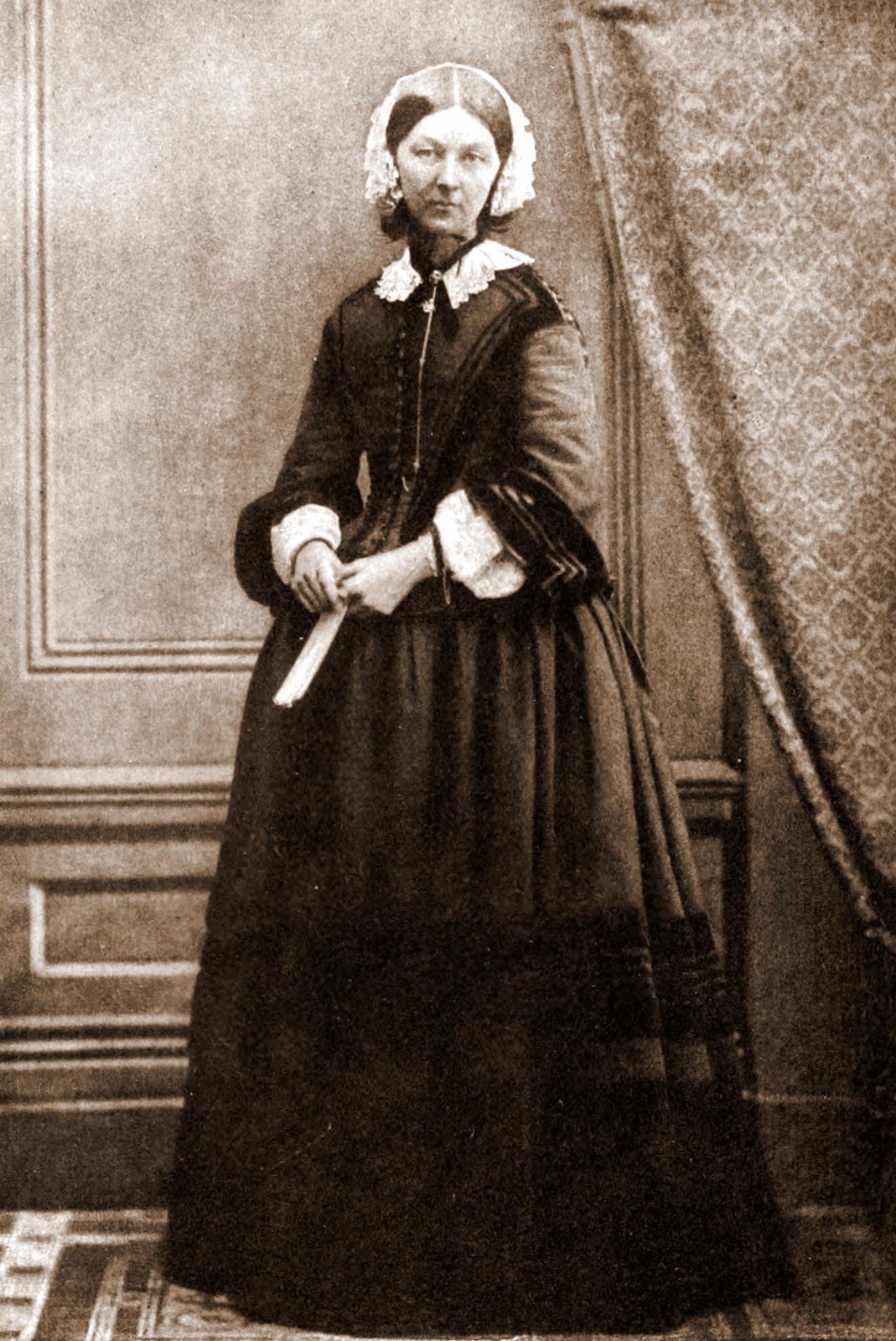
Florence Nightingale was born in 1820 in Florence, Italy, to a wealthy British family, and was named after the city of her birth. Despite her family's objection that nursing was an unsuitable profession for a woman of her class, Nightingale insisted on receiving formal nursing training in Germany, believing the profession required science and discipline, not merely occasional charity.
During the Crimean War in 1854, Nightingale led a team of nurses to a British military hospital in Turkey, where she found soldiers dying in far greater numbers from disease and poor sanitation than from battle wounds. She implemented strict hygiene and ventilation measures, and mortality rates fell dramatically within months, earning her the nickname «The Lady with the Lamp» for her nighttime rounds checking on patients.
Pioneer of Medical Statistics
Nightingale used innovative statistical graphics to convince the British government that most soldier deaths stemmed from preventable infection rather than combat, becoming one of the first people to use statistics to reform public health policy. She founded the world's first organized secular nursing school in London in 1860, and is regarded today as the founder of modern nursing as a science-based profession.