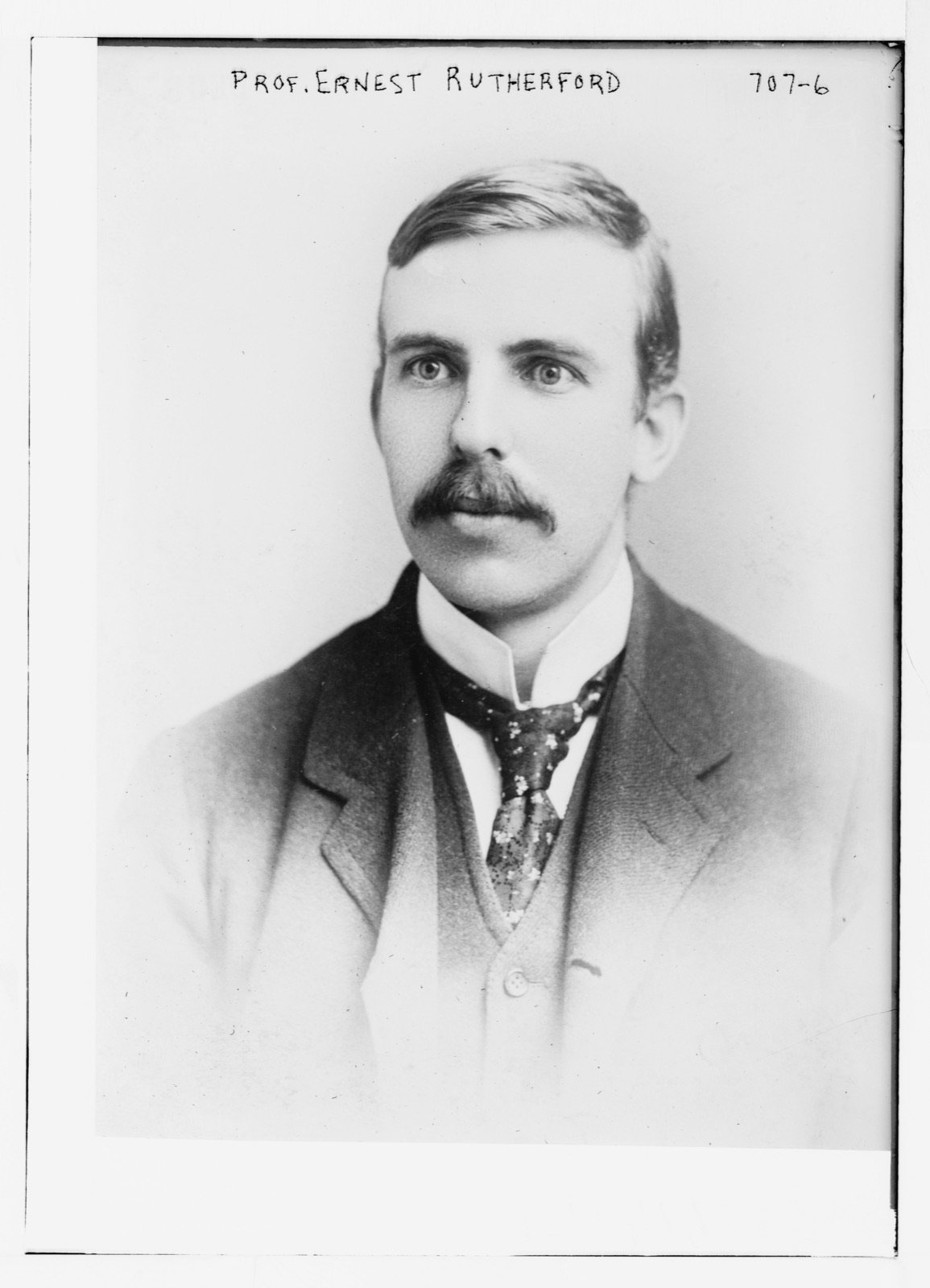
Ernest Rutherford was born in 1871 in Brightwater, New Zealand, to a modest farming family, and his academic excellence earned him a scholarship to study at Cambridge University in England, where he joined the famed Cavendish Laboratory and began his research into atomic radiation.
Rutherford classified the radiation emitted by radioactive elements into alpha and beta particles, laying important groundwork for understanding radioactivity—work for which he won the 1908 Nobel Prize in Chemistry. His most famous achievement, however, came in 1911 with the “gold foil experiment,” which proved the existence of a small, densely positive nucleus at the atom's center, establishing the modern atomic model that replaced earlier ones.
Father of nuclear physics
Rutherford went on to become the first person to artificially “split” an atom in 1917, paving the way for the entire field of nuclear physics. He mentored numerous future Nobel laureates, making him one of the most influential teachers in the history of science, and element 104, “rutherfordium,” was named in his honor.
- Discovered the atomic nucleus via the gold foil experiment
- Classified alpha and beta radiation
- Won the 1908 Nobel Prize in Chemistry
- First to artificially split an atom, in 1917