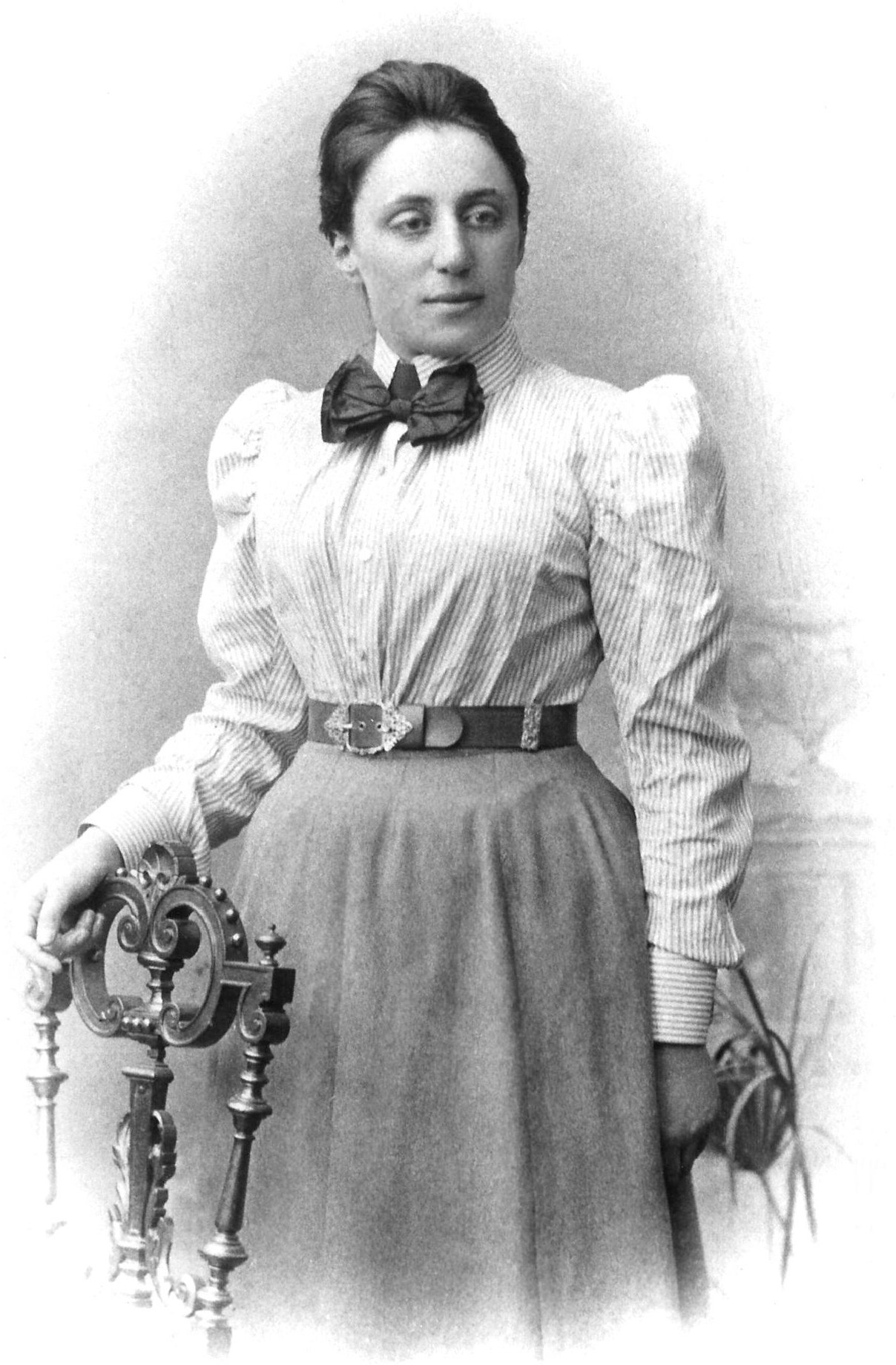
Emmy Noether was born in 1882 in Erlangen, Germany, into a family with a strong mathematical tradition. She faced significant obstacles in her academic career because of her gender, permitted only to audit university lectures before earning her doctorate from the University of Erlangen in 1907.
In 1915 David Hilbert and Felix Klein invited her to join the University of Göttingen, but the faculty refused to appoint her as professor due to her sex, forcing Hilbert to list her lectures under his own name. In 1918 Noether proved «Noether's theorem», showing that every continuous symmetry in a physical system corresponds to a conservation law — energy conservation arises from time symmetry, momentum conservation from spatial symmetry.
Scientific Legacy
Noether's theorem became one of the most important theoretical foundations of modern physics, from classical mechanics to general relativity and particle physics. She also made fundamental contributions to the development of modern abstract algebra. Forced to flee Nazi Germany in 1933 due to her Jewish heritage, she settled at Bryn Mawr College in the United States until her sudden death in 1935.