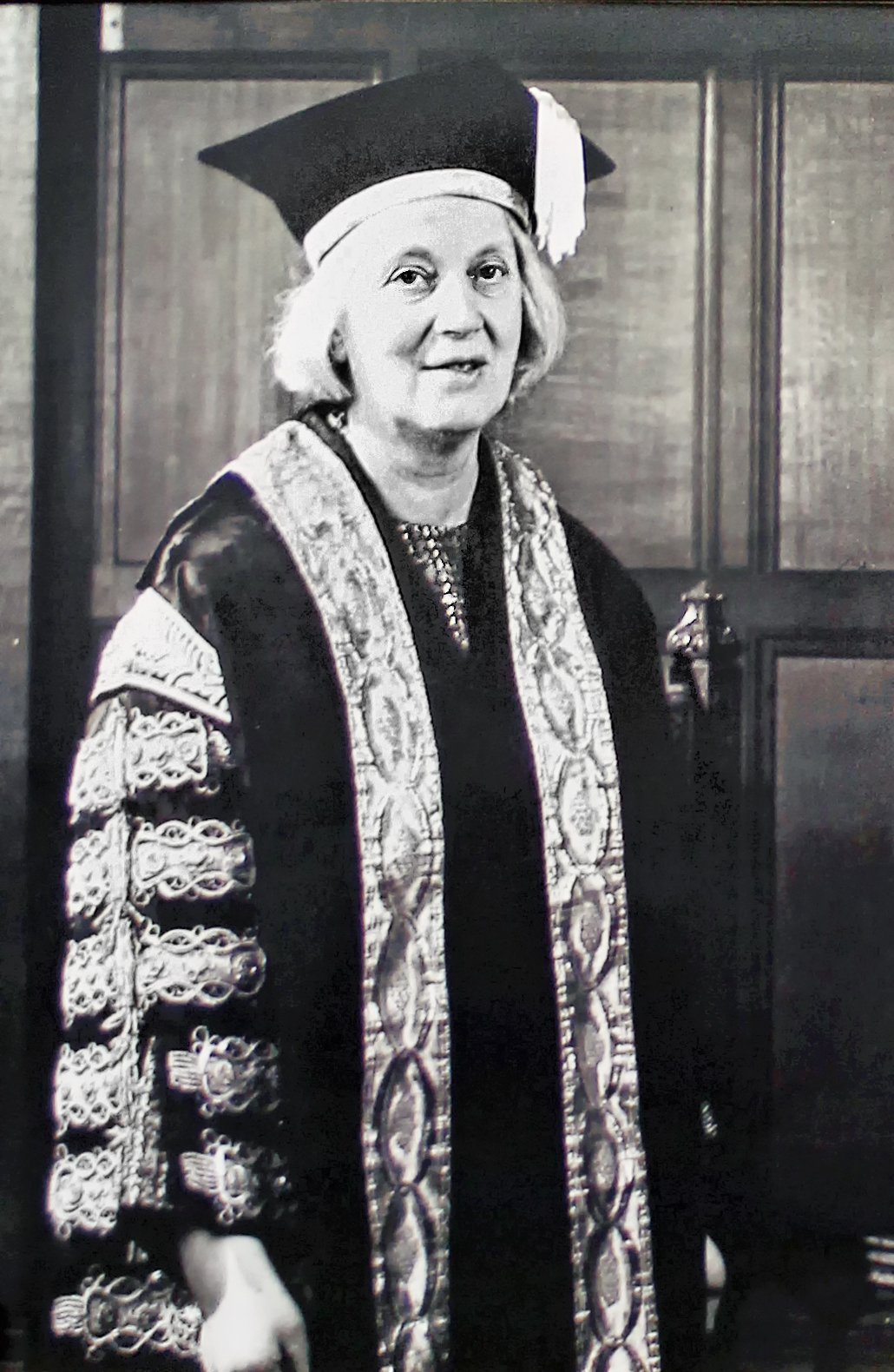
Dorothy Crowfoot Hodgkin was born in 1910 in Cairo, Egypt, to British parents, and became fascinated with chemistry and crystals from childhood. She studied chemistry at Oxford University, then moved to Cambridge to work with John Desmond Bernal, a pioneer in using X-ray diffraction to study the structure of complex biological molecules.
Hodgkin returned to Oxford, where she spent decades advancing X-ray crystallography, a technique that analyzes the diffraction pattern of X-rays passing through a crystal to deduce the precise arrangement of atoms within a molecule. In 1945 she determined the complete molecular structure of penicillin, in 1955 she unraveled the highly complex structure of vitamin B12, and in 1969 she crowned her career by determining the three-dimensional structure of insulin after more than thirty years of work on it.
Scientific Legacy
Hodgkin was awarded the 1964 Nobel Prize in Chemistry, solely, for determining the structures of penicillin and vitamin B12, becoming the third woman to win the Nobel Prize in Chemistry after Marie Curie and her daughter Irène. Her research paved the way for a deeper understanding of protein and drug structures, and directly influenced the development of synthetic insulin for treating diabetes. She died in 1994.