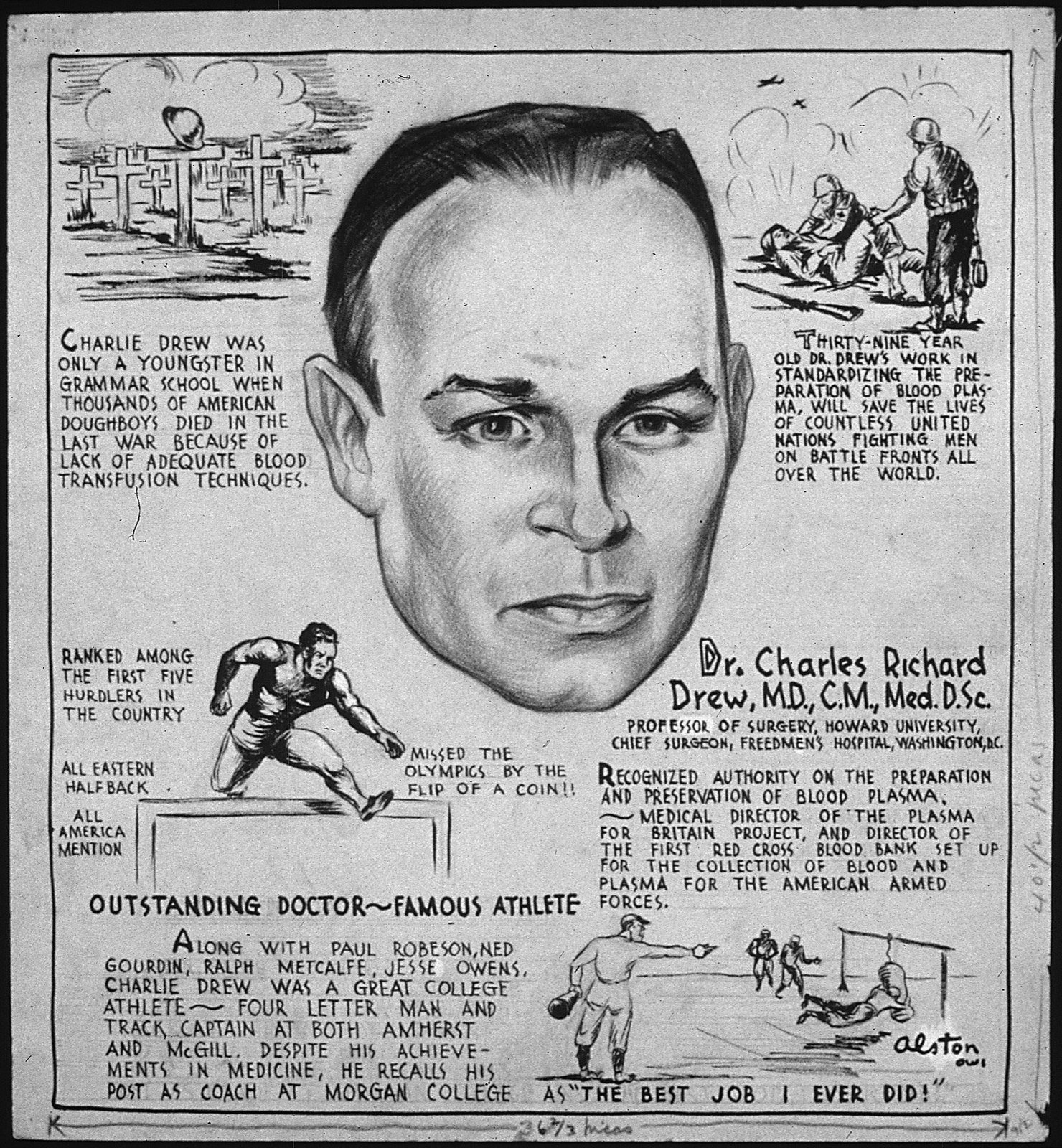
Charles Drew was born in 1904 in Washington, D.C., studied medicine at McGill University in Canada, then specialized in surgery, before earning a Doctor of Medical Science degree from Columbia University in 1940, becoming the first African American to receive that degree, with his dissertation focused on blood banking and preservation.
Drew developed effective methods for separating blood plasma from red cells and processing and storing it for longer periods, making large-scale blood transfusion possible during wars and disasters. In 1940 he supervised the «Blood for Britain» program, which collected plasma from American donors to send to wounded British soldiers, and he then became the first director of the American Red Cross blood bank.
A Principled Stand Against Discrimination
Drew resigned from his position in 1942 to protest a racist policy that segregated Black donors' blood from white donors' blood in American blood banks, despite there being no scientific basis for such distinction. He returned to teach at Howard University's medical school, devoting the rest of his life to training a new generation of Black surgeons, leaving both a scientific and moral legacy.