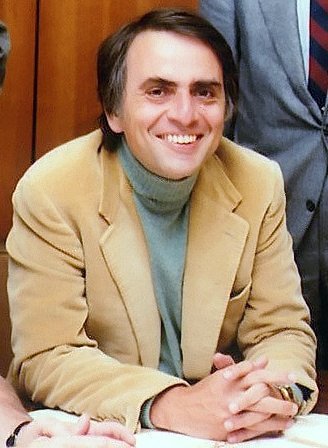
Carl Sagan was born in 1934 in Brooklyn, New York, and from childhood was captivated by the stars after a visit to a world's fair sparked his imagination about the possibility of life beyond Earth. He studied astronomy and astrophysics, later becoming a prominent professor at Cornell University specializing in planetary science and atmospheres.
Sagan contributed to numerous NASA missions, including the Viking missions to Mars and the Voyager program, and was a key figure behind the “Golden Record” sent aboard the Voyager spacecraft, carrying messages, sounds, and images representing human civilization into deep space. He also helped found the Search for Extraterrestrial Intelligence (SETI) project.
An ambassador of science to the public
Sagan became a household name through his 1980 documentary series “Cosmos,” watched by hundreds of millions worldwide, which explained the mysteries of the universe in accessible, poetic language that sparked a passion for science in entire generations. He also wrote influential books such as “Pale Blue Dot,” inspired by a rare image of Earth taken by Voyager 1 from the edge of the solar system. He died in 1996, leaving a lasting legacy of bringing science to the public.
- Contributed to the Viking and Voyager space missions
- Oversaw the Voyager Golden Record
- Hosted the acclaimed documentary series “Cosmos”
- Helped found the SETI project