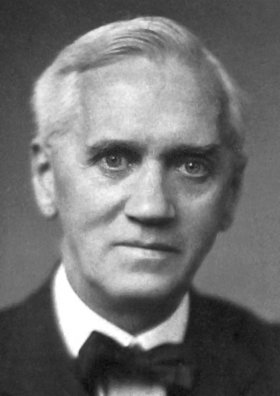
Alexander Fleming was born in 1881 in Lochfield, Scotland, and studied medicine in London before serving as an army medic during World War I, where he witnessed firsthand how many soldiers died from infected wounds—an experience that shaped his lifelong interest in fighting microbes.
In 1928, returning from a holiday, Fleming noticed that mold had accidentally grown in one of his bacterial culture dishes and had halted the growth of the surrounding bacteria. Following up on this chance observation, he identified the substance as penicillin, the world's first true antibiotic—a discovery that would forever change the course of medicine.
From a humble lab to a medical revolution
Fleming alone could not turn penicillin into a practical drug; scientists Howard Florey and Ernst Chain completed that work in the 1940s, making penicillin widely available and saving millions of lives from bacterial infections. Fleming shared the 1945 Nobel Prize in Physiology or Medicine with Florey and Chain.
- Discovered penicillin, the world's first antibiotic
- Discovered the antibacterial enzyme lysozyme
- Won the 1945 Nobel Prize in Medicine
- Opened the door to the modern antibiotic era