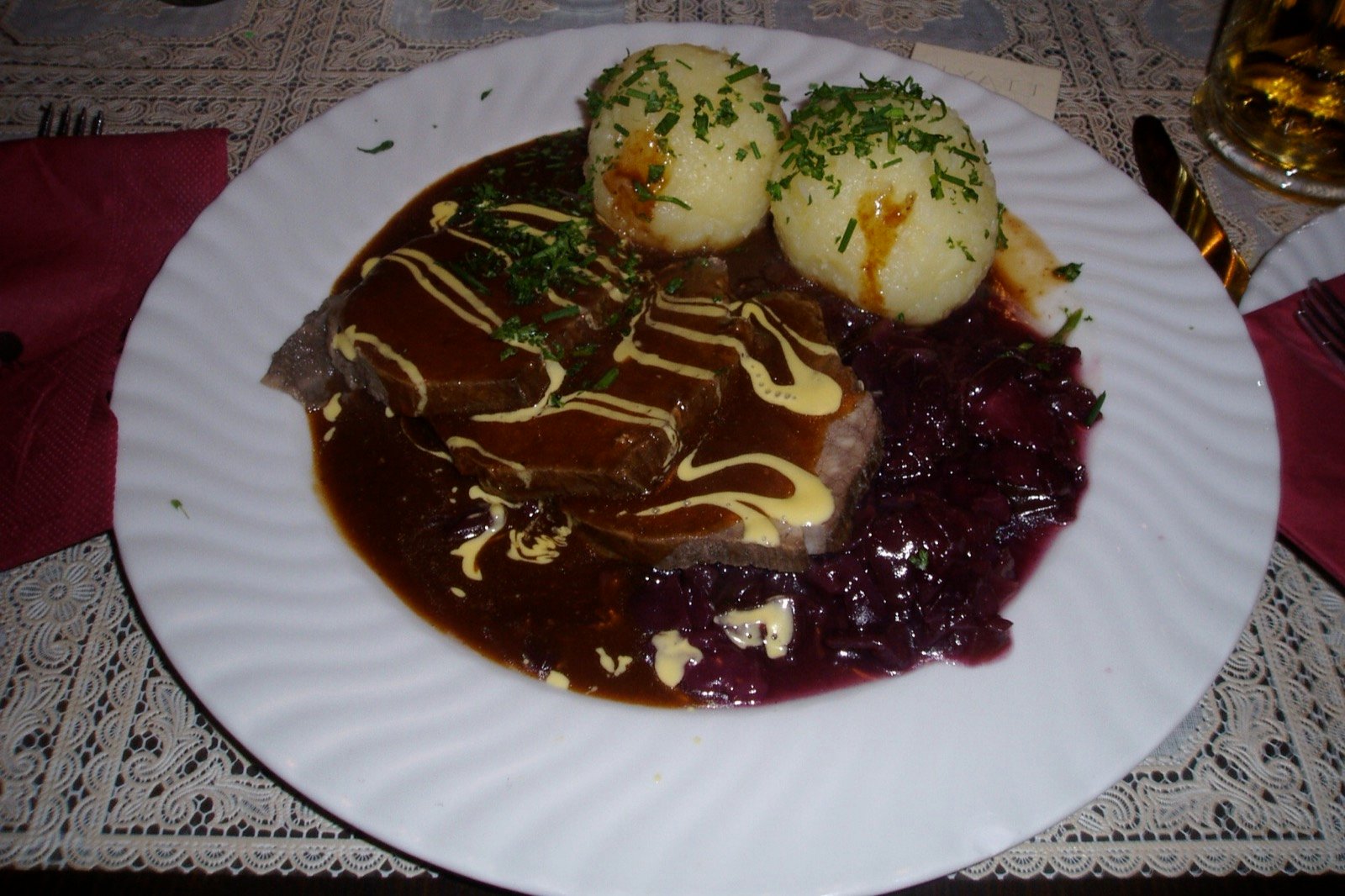
A traditional German beef roast marinated for days in vinegar, wine and spices, then slow-braised until fork-tender and served with a rich sweet-and-sour gravy.
التحضير40 د
الطهي150 د
الحصص6
الصعوبةصعب
سعرات560
المقادير
خطوات التحضير
Combine the vinegar, wine and water with the onions, carrots, celery, cloves, peppercorns and bay leaves in a large bowl.
Submerge the beef fully in the marinade, cover, and refrigerate for 3 to 5 days, turning the meat daily.
Remove the meat from the marinade and pat it dry, reserving the marinade liquid and vegetables.
Heat the oil in a large pot and sear the meat on all sides until deeply browned.
Strain the marinade vegetables and add them to the pot with the meat.
Pour the strained marinade liquid over the meat until it is nearly covered.
Cover and simmer very gently for 2.5 to 3 hours until the meat is fork-tender.
Remove the meat to rest, then strain the cooking liquid into a separate pot.
Add the raisins, brown sugar and jam to the strained liquid and bring to a simmer.
Mix the flour with a little cold water and whisk it in gradually to thicken the gravy.
Slice the meat and serve with the rich gravy.
نصيحة
Do not rush the marinating time; the longer it sits (up to 5 days), the deeper the flavour and more tender the meat. Leftover marinade liquid can be frozen and reused for the dish another time.
Sauerbraten is considered Germany's national meat dish; its name literally means «sour roast», referring to the way it is marinated for several days in a mixture of vinegar, red wine and spices. The dish dates back to the Middle Ages, when vinegar marinades were an effective way to preserve and tenderize meat before refrigeration existed.
Recipes vary by German region, but the common thread is a long marinating time that breaks down tough muscle fibres and imparts a deep tangy flavour, followed by hours of slow braising until the meat becomes remarkably tender. The final gravy is often made from the marinade itself, with raisins or berry jam added to balance the acidity with a touch of sweetness, and it is traditionally served with potato dumplings (knödel) and red cabbage.



💬 التعليقات (0)
لا توجد تعليقات بعد — كوني أول من يعلّق!