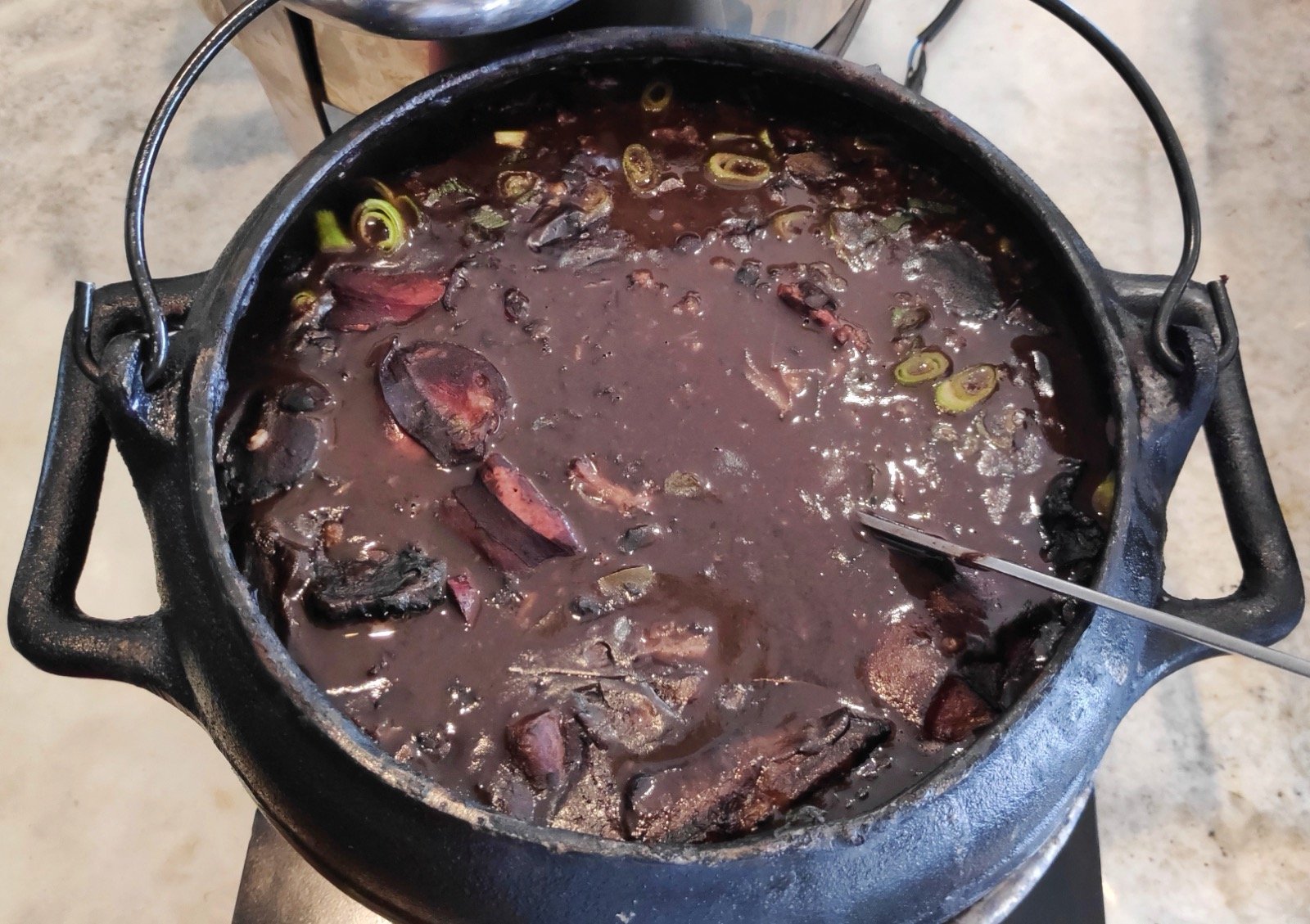
Brazil's national dish: a rich stew of black beans slow-cooked with a mix of smoked and salted pork cuts, traditionally served with white rice and sautéed collard greens.
التحضير30 د
الطهي180 د
الحصص8
الصعوبةصعب
سعرات610
المقادير
خطوات التحضير
Soak the salted meats in cold water for several hours, changing the water twice to reduce excess saltiness.
Drain the soaked beans and rinse well.
In a large pot, heat the oil and sauté the onion and garlic until softened.
Add the salted meats, bacon, and beef, and cook for a few minutes.
Add the beans and bay leaves, then cover with water about 5 cm above the mixture.
Simmer gently for 2 to 3 hours, adding more water as needed.
Add the sliced sausages during the last 30 minutes of cooking.
Check that the beans and meats are very tender and the broth has thickened.
Adjust seasoning with salt and black pepper.
Serve the feijoada hot with white rice, sautéed collard greens, orange slices, and farofa.
نصيحة
Avoid adding salt too early, as the salted meats often provide enough flavour already; taste the broth first. Feijoada tastes even better the next day once the flavours have had time to meld.
Feijoada is Brazil's most famous dish, essentially a stew of black beans cooked with an assortment of pork cuts, including smoked and salted parts. Its origins trace back to the Portuguese colonial era; popular legend holds that enslaved people created feijoada using undesired cuts of meat discarded by plantation owners, though modern research points to more complex origins tied to European bean-stew traditions.
The dish is traditionally served on Saturdays in Brazil, accompanied by white rice, toasted cassava flour (farofa), sautéed collard greens, and orange slices that aid digestion. Long, slow cooking is the secret to a great feijoada, giving enough time for the meat fats to melt into the bean broth and build deep, rich flavour.



💬 التعليقات (0)
لا توجد تعليقات بعد — كوني أول من يعلّق!