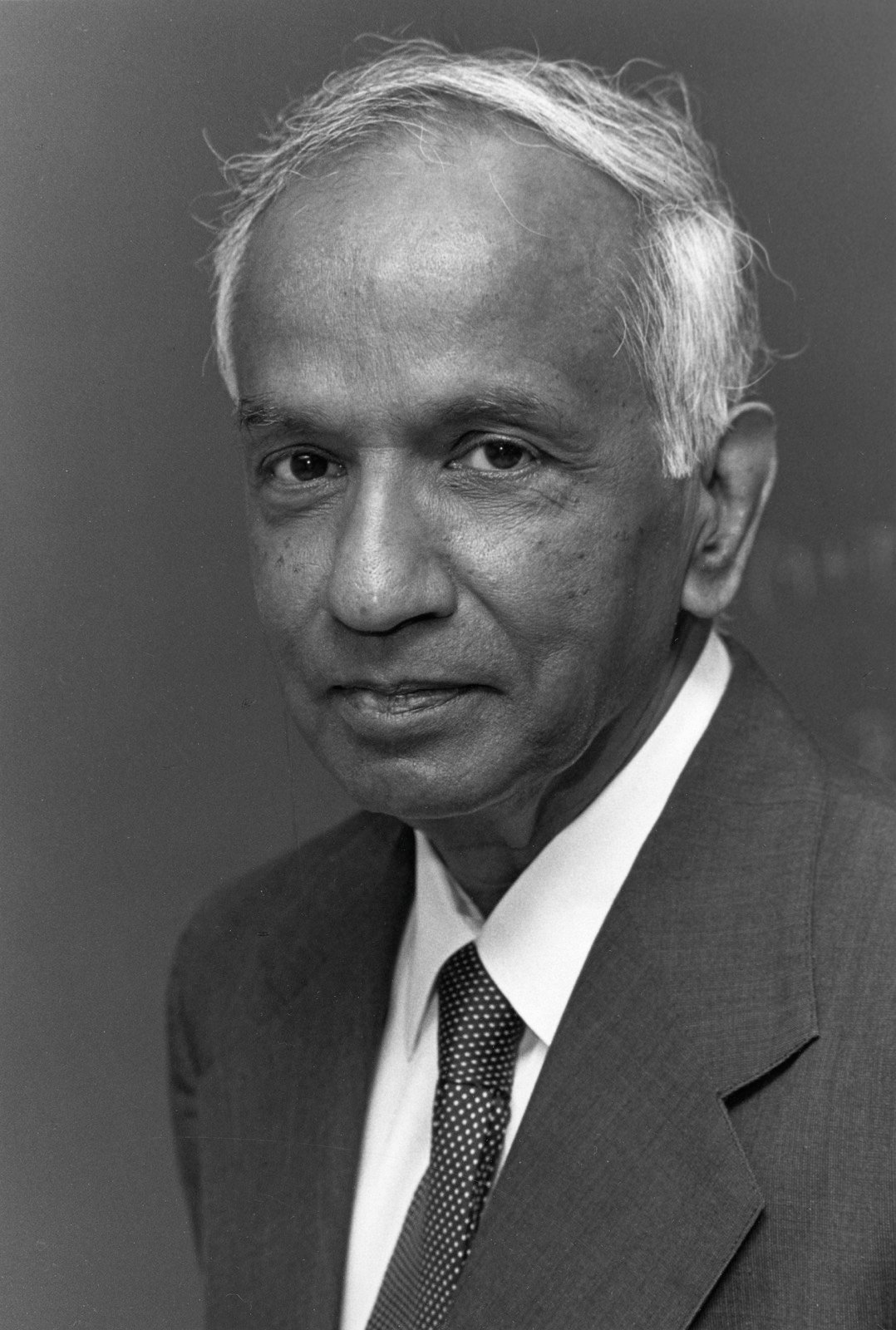
Subrahmanyan Chandrasekhar was born in 1910 in Lahore, Punjab, British India, the nephew of Nobel laureate physicist C.V. Raman. He showed early brilliance in mathematics and physics, earning a scholarship to study astrophysics at Cambridge University in Britain.
During his sea voyage to England in 1930, at just nineteen, Chandrasekhar performed theoretical calculations showing that a white dwarf star could not remain stable if its mass exceeded a certain limit equal to about 1.44 times the mass of the Sun — what became known as the «Chandrasekhar limit». This result implied that stars more massive than this limit must collapse into a denser state, such as a neutron star or black hole.
Scientific Legacy
Chandrasekhar's ideas initially faced fierce opposition from British astronomer Arthur Eddington, prompting him to move to the United States and settle at the University of Chicago, where he spent the rest of his career. He was awarded the 1983 Nobel Prize in Physics, shared with William Fowler, for his research on stellar evolution. NASA's Chandra X-ray Observatory was named in his honor, launched in 1999. He died in 1995.