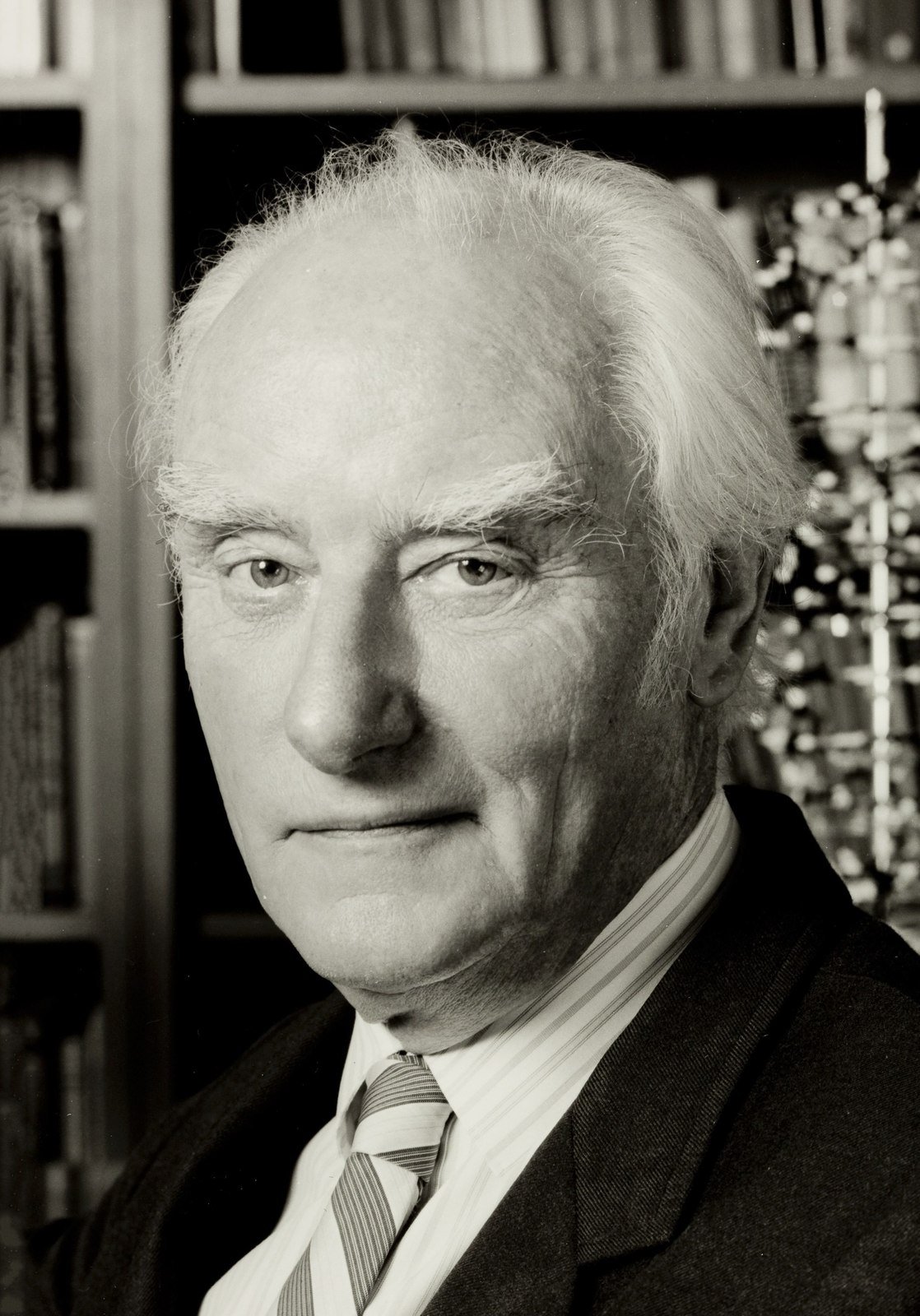
Francis Crick was born in 1916 in Northampton, England, and studied physics at University College London before World War II interrupted his academic path; during the war he developed naval mines for the British Admiralty. After the war, his interest shifted to biology, driven by curiosity about how genetic information passes between living organisms, and he joined the Cavendish Laboratory at Cambridge University.
There Crick met the young American biologist James Watson, and the two shared a passion for solving the mystery of DNA's structure. Using X-ray diffraction data captured by Rosalind Franklin and Maurice Wilkins, Crick and Watson built the double-helix model of DNA in 1953, which immediately explained how the molecule could carry genetic information and replicate itself.
From Molecular Structure to the Genetic Code
Crick's contribution did not end with the structure discovery; he continued working to understand how DNA's sequence is translated into proteins, formulating what became known as the «central dogma» of molecular biology, describing the flow of genetic information from DNA to RNA to protein. In 1962 he shared the Nobel Prize in Medicine with Watson and Maurice Wilkins, and spent his final years researching the neural basis of consciousness at the Salk Institute in California.