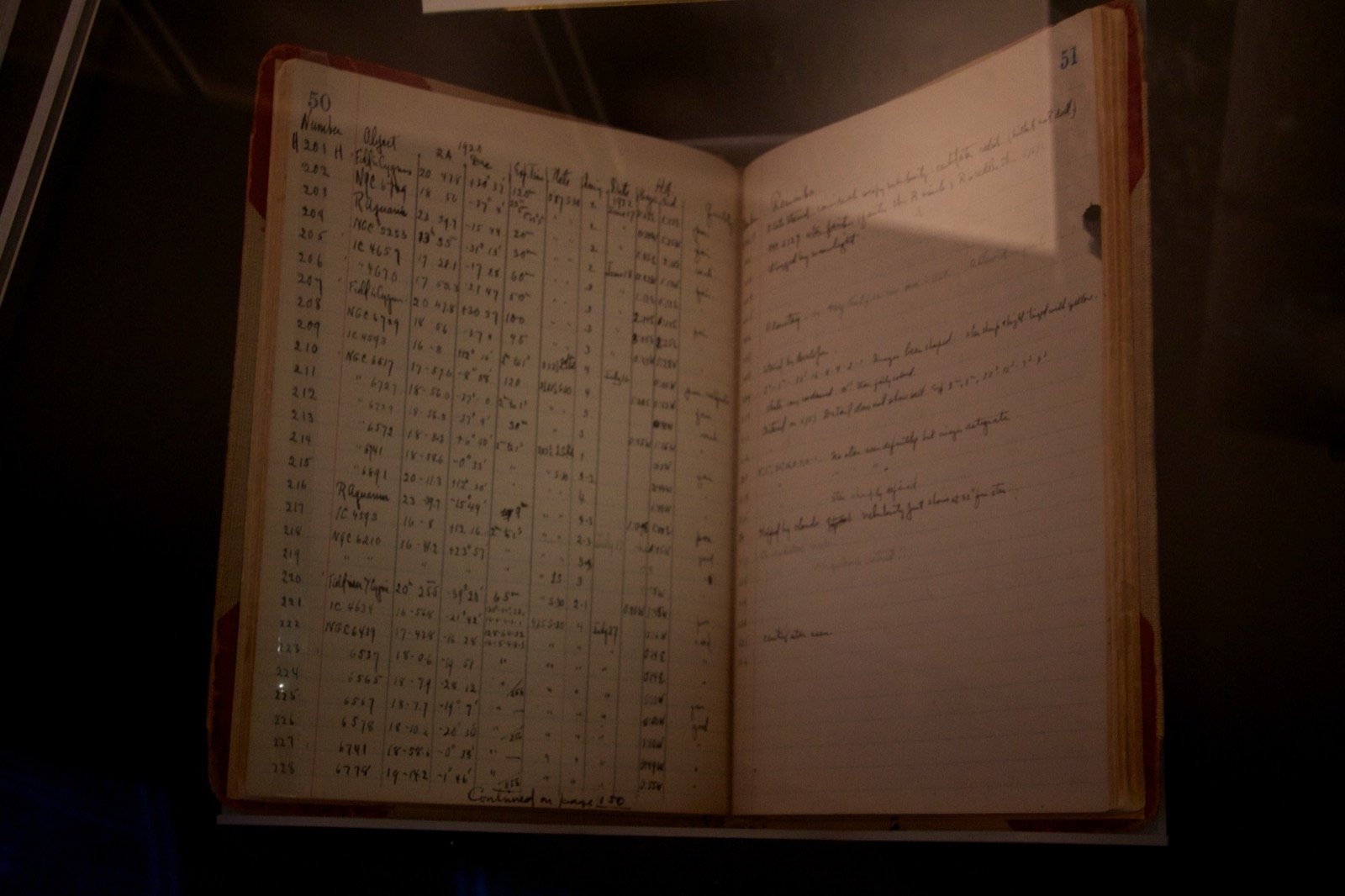
Edwin Hubble was born in 1889 in Marshfield, Missouri, and studied law at Oxford University as a Rhodes Scholar before pivoting passionately to astronomy, earning his PhD from the University of Chicago in 1917. In 1919 he joined Mount Wilson Observatory in California, then home to the world's largest telescope.
In 1923 Hubble used the Mount Wilson telescope to observe a variable star in the Andromeda nebula, and calculated its distance to be far beyond the boundaries of the Milky Way, proving Andromeda was an independent galaxy in its own right, not a nebula within our own galaxy as previously believed. This discovery radically expanded the known size of the universe overnight.
Scientific Legacy
Hubble continued observing other galaxies, and in 1929 noticed that most of their light was redshifted by an amount proportional to their distance from us — what became known as «Hubble's law», the first empirical evidence that the universe is expanding. This discovery became the cornerstone of the later Big Bang theory. In his honor, the Hubble Space Telescope was named after him, launched in 1990 to become one of the most important astronomical instruments in history. Hubble died in 1953.