Jalal al-Din Muhammad al-Balkhi was born in 604 AH/1207 CE in Balkh, in present-day Afghanistan. His family fled the Mongol advance, traveling through Baghdad, Mecca, and Syria before settling in Konya, capital of the Seljuk Sultanate of Rum, where he studied Hanafi jurisprudence and inherited the spiritual leadership of his father, the Sufi scholar Baha' al-Din Walad.
Rumi's path changed profoundly after meeting the wandering dervish Shams al-Din of Tabriz, who awakened a deep mystical dimension expressed in his flowing Persian poetry. He composed his masterwork, the six-volume «Masnavi-ye Ma'navi», a didactic mystical poem weaving parables and symbolism with ethical and spiritual reflection, alongside the «Divan-e Shams-e Tabrizi».
His Legacy
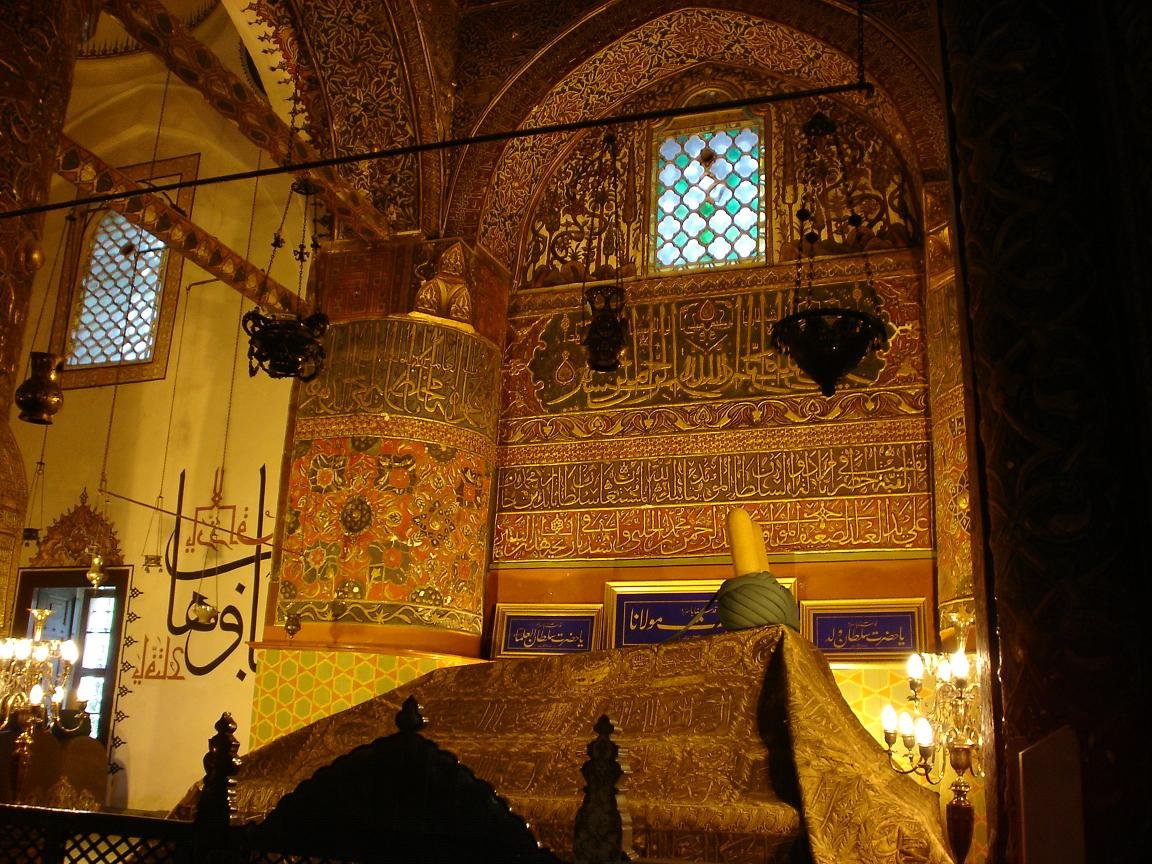
After his death in Konya in 672 AH/1273 CE, his disciples founded the Mevlevi Sufi order, known for its whirling «sama» ceremony. His poetry has been translated into most of the world's languages, making Rumi one of the most widely read Muslim Sufi poets to this day.