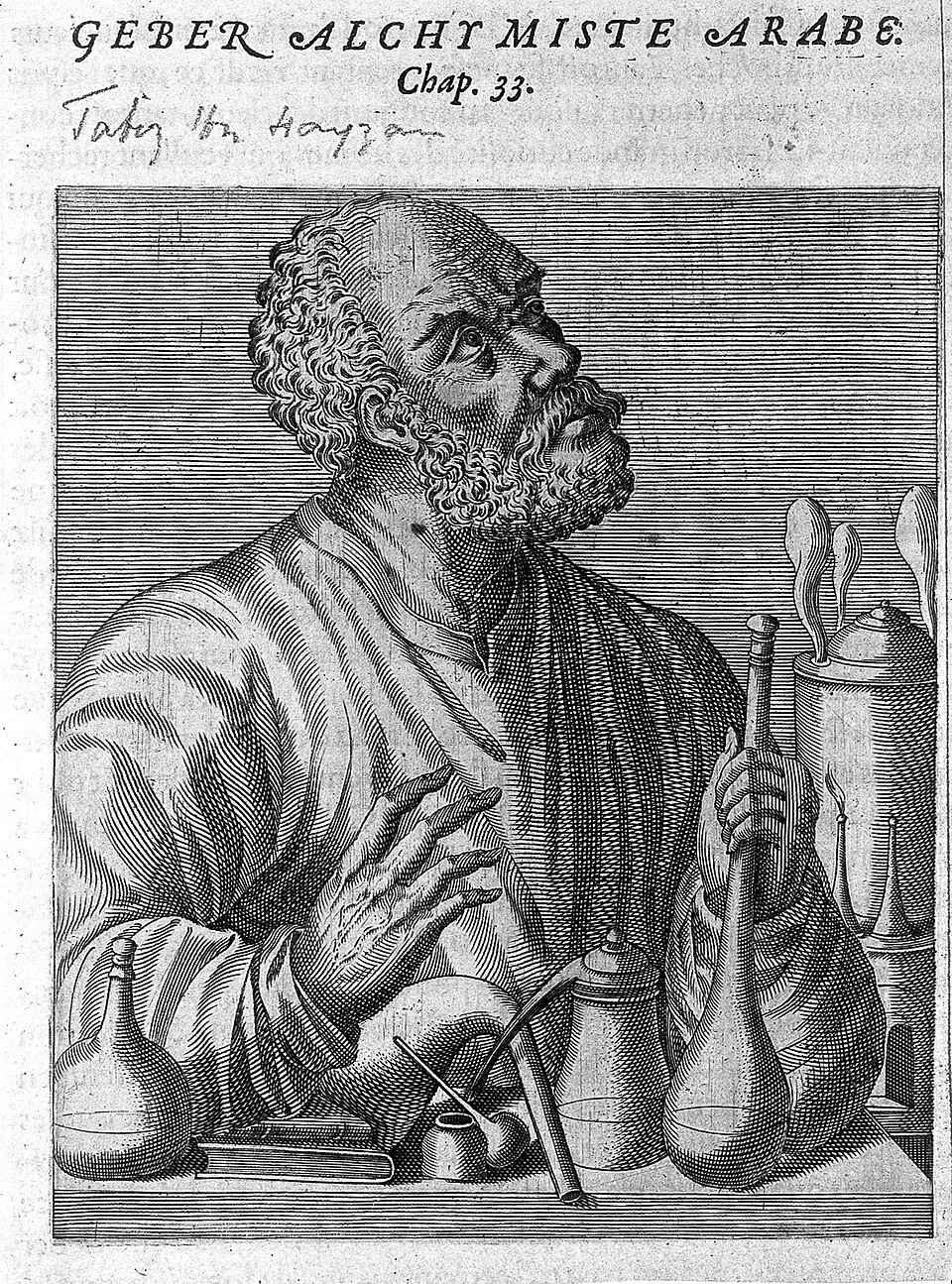
Jabir ibn Hayyan was born in Tus, Khurasan, and grew up moving between Kufa and Baghdad, his name associated with the Abbasid court during the reign of Harun al-Rashid; sources note his connection to the Barmakid family, who were leading statesmen of the era. Jabir engaged with several fields of knowledge, but his greatest focus was chemistry, then known as "the science of craft," which he transformed from practices tinged with mysticism into a discipline grounded in observation and systematic experimentation.
Experimental Method and Laboratory Tools
Jabir ibn Hayyan is credited with developing several fundamental chemical processes, including distillation, crystallization, sublimation, calcination, and dissolution, describing them precisely enough to be reproduced — making him a pioneer of the experimental method in natural science centuries before it took shape in Europe. He is also credited with developing the alembic, an apparatus used in distillation that later became a staple of chemical laboratories. Works attributed to him were translated into Latin in the Middle Ages under the name "Geber," profoundly influencing the development of European chemistry into the Renaissance.
- Established the systematic experimental method for studying matter and chemical reactions
- Precisely described distillation, crystallization, sublimation, and calcination
- Developed the alembic and other foundational laboratory apparatus
- His Latin-translated works shaped European chemistry for centuries
Despite modern scholarly debate over the attribution of some works to him, Jabir ibn Hayyan remains a historic symbol of chemistry's transformation from mystical practice into an organized experimental science that shaped the course of scientific history. His name remains cited in the history of science as one of the earliest figures to organize chemical knowledge within a documented, reproducible framework.