The first teeth usually start appearing between four and seven months, though timing varies a lot from baby to baby — some are born with a tooth already, while others don't get their first one until after their first birthday, and both are completely normal.
Common teething signs
- Noticeably more drooling than usual.
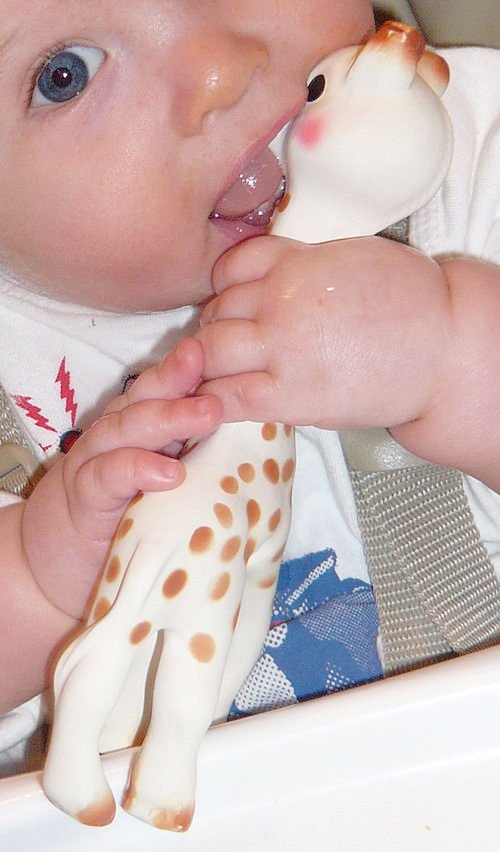
- A strong urge to bite or chew on anything within reach — fingers, toys, you name it.
- Mild redness or slight swelling on the gum where a tooth is coming through.
- More fussiness and crying than usual, especially in the evening.
- Disrupted sleep or occasional feeding refusal due to discomfort.
It's important to tell normal teething symptoms apart from ones that need medical evaluation. High fever, severe diarrhea, or widespread rash are not typical teething symptoms, despite a common belief otherwise — if they appear, it's better to see the pediatrician than to assume it's teething.
How do you ease the discomfort?
A few simple, safe approaches can bring real relief to sore gums:
- Rubber teething rings chilled in the fridge (not the freezer) provide instant relief when chewed on.
- Gently massaging your baby's gums with a clean finger can ease pressure and discomfort.
- A clean, cool, damp cloth can work well as a substitute teether.
- If your baby is eating solids, chilled fruit pieces in a baby feeder mesh can also help.
Avoid using any teething gel or topical medication without checking with your pediatrician first, as some aren't recommended for young infants. And remember — as uncomfortable as teething is for both of you, it's a temporary phase that passes with a little patience and some extra comfort from you.