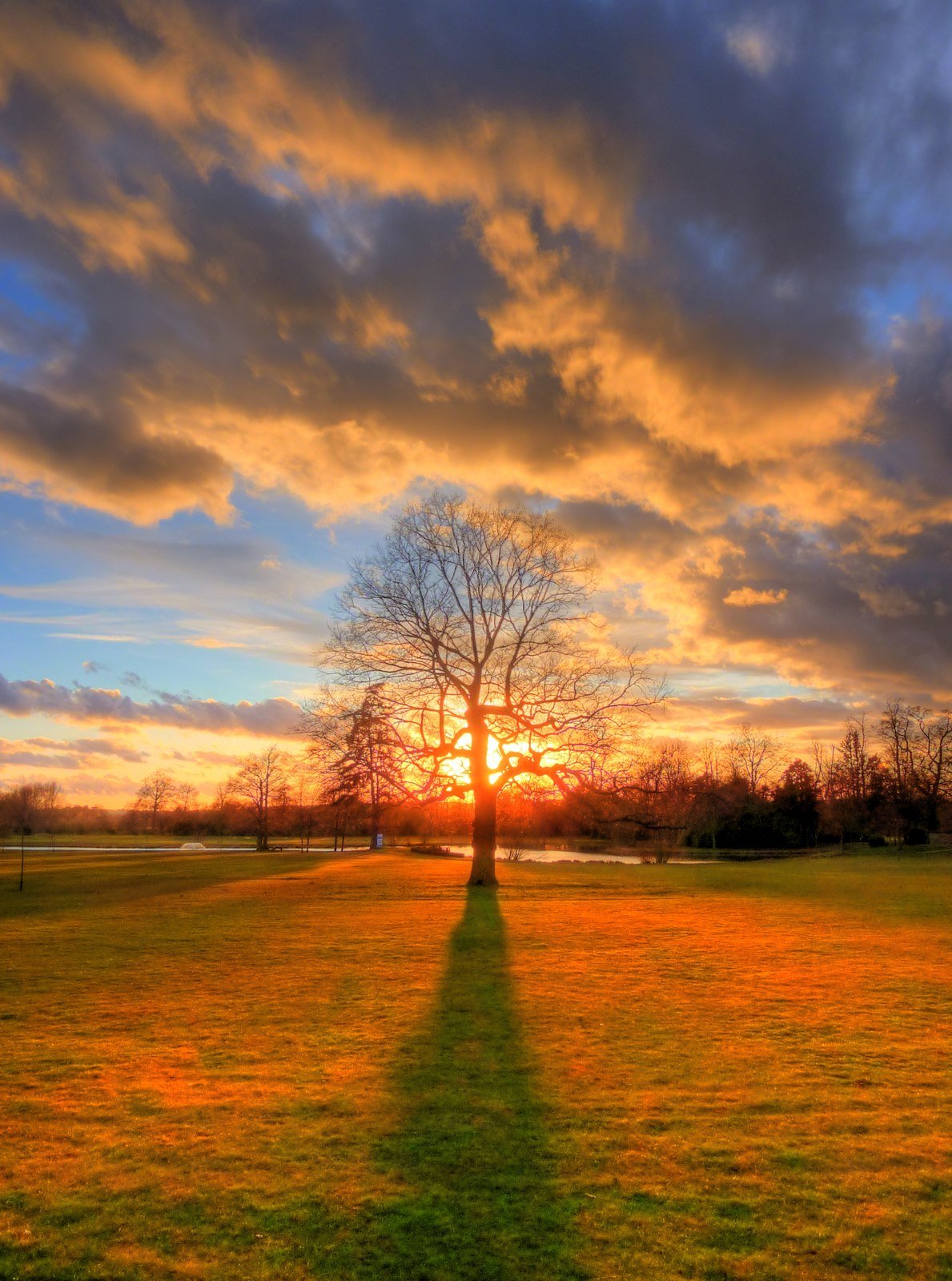
Light always travels in a straight line. If we put a solid object in its path, like your hand or a tree, the light cannot pass through it, so a dark area forms behind the object called a «shadow».
A shadow's shape and size change depending on where the light source is. When the sun is low near the horizon, early morning or before sunset, your shadow is very long. When the sun is high at midday, your shadow becomes very short, almost right under your feet.
Transparent objects like glass let light pass through, so they barely cast a shadow, while opaque objects like wood or stone block light completely and cast a dark, clear shadow.