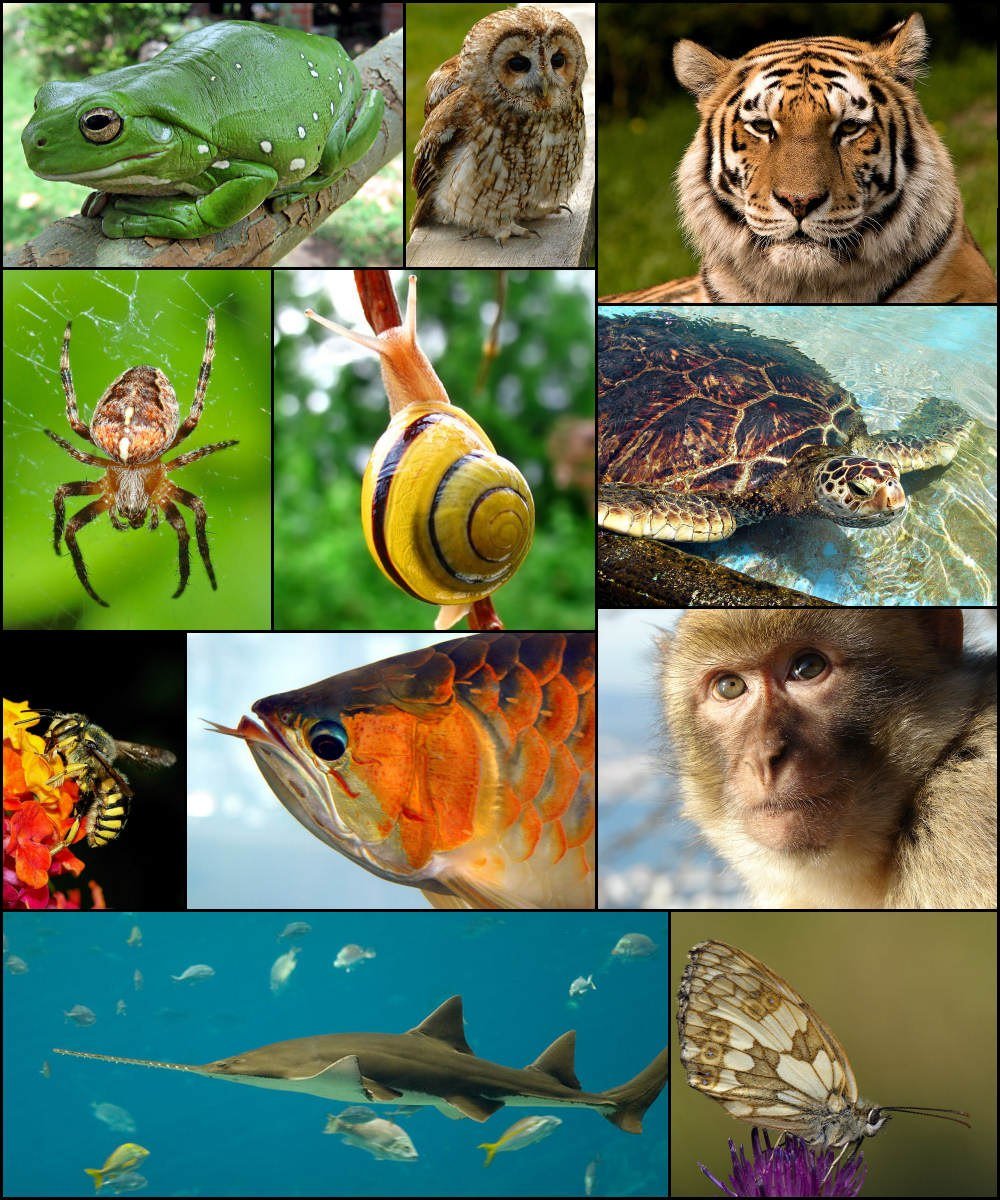
Scientists sort animals into big groups based on shared features. The «mammal» group includes animals with fur or hair that give birth to live babies and feed them milk, like cats, elephants, and humans themselves.
The «bird» group has feathers, two wings, and lays eggs, like sparrows and ducks. «Reptiles» have skin covered in scales and also lay eggs, like turtles and snakes. «Amphibians», such as frogs, spend part of their life in water and part on land.
There are also «fish», which live in water and breathe through gills, and «insects», which have six legs and a body divided into three parts, like ants and butterflies. This classification helps scientists study animals and understand how they are similar and different.