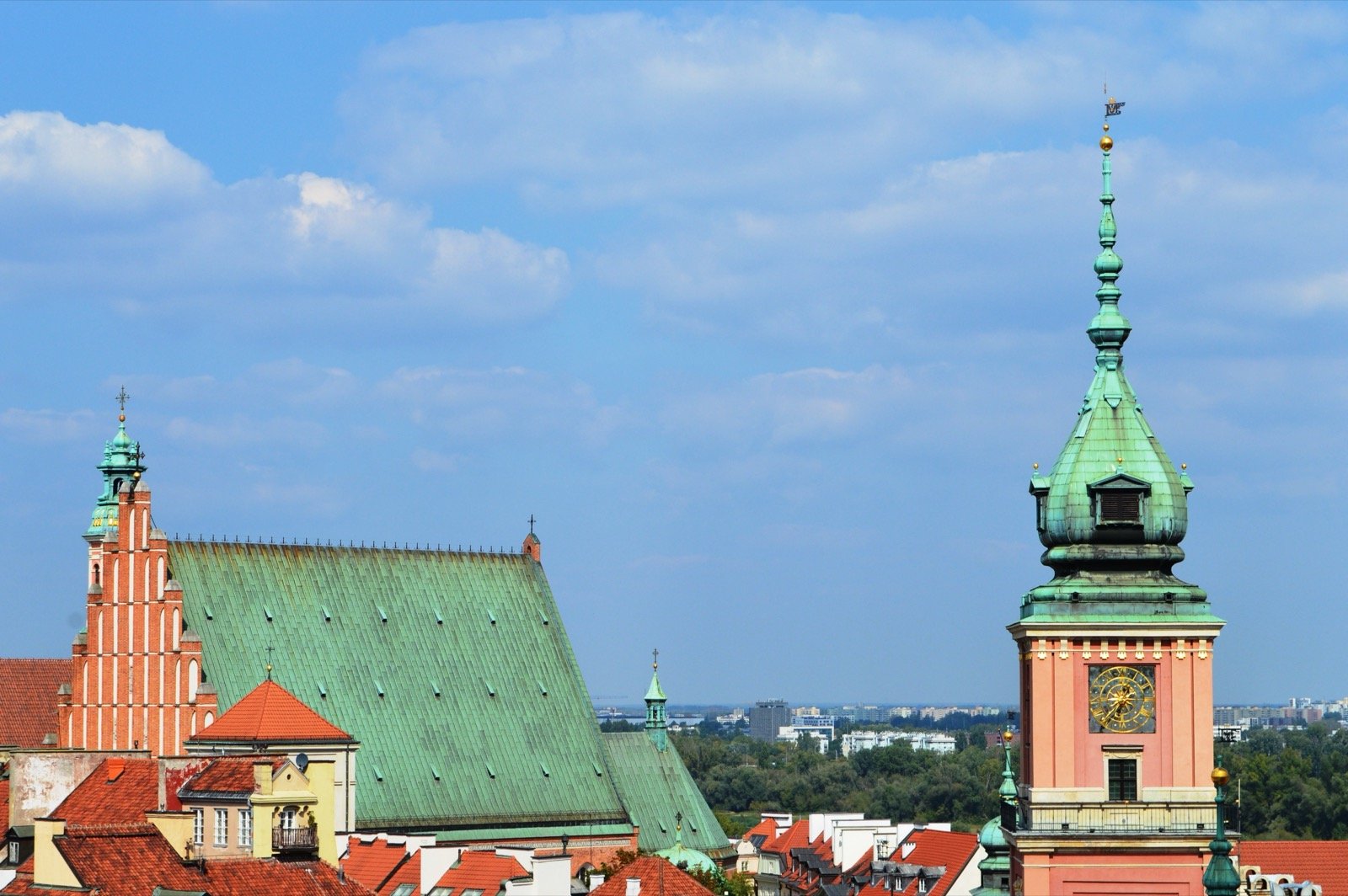
Warsaw is the capital and largest city of Poland, situated on the banks of the «Vistula» River in the country's center. Its origins trace to small settlements in the 13th century, and it became Poland's official capital in 1596 when King «Sigismund III» moved the seat of government there from Kraków.
A City Rebuilt from Ashes
Warsaw was almost entirely destroyed during World War II, as German forces razed more than 85% of its buildings in retaliation for the 1944 Warsaw Uprising. In one of the most remarkable reconstruction projects in modern history, the city's residents rebuilt the «Old Town» with painstaking precision, relying on historical paintings and drawings, an achievement later recognized with its inscription on the UNESCO World Heritage list.
- The fully rebuilt Old Town is a UNESCO World Heritage Site
- Composer Frédéric Chopin was born near Warsaw and grew up in the city
- The 1944 Warsaw Uprising is one of the most notable chapters of resistance in World War II
- The Palace of Culture and Science is the tallest building in Poland
Warsaw today blends its tragic past with its role as a renewed economic and cultural hub of Central Europe, mixing rebuilt historic architecture with modern skyscrapers.