Abu Ja'far Muhammad ibn Jarir al-Tabari was born in the city of Amol in the region of Tabaristan, showing remarkable talent from an early age; it is said he memorized the Qur'an at the age of seven. He traveled in search of knowledge to Rayy, Baghdad, Basra, Kufa, the Levant, and Egypt, meeting leading scholars of hadith, jurisprudence, and language along the way, before settling in Baghdad, where he spent most of his scholarly life devoted entirely to writing and teaching, forgoing marriage to focus on knowledge.
Exegesis and History
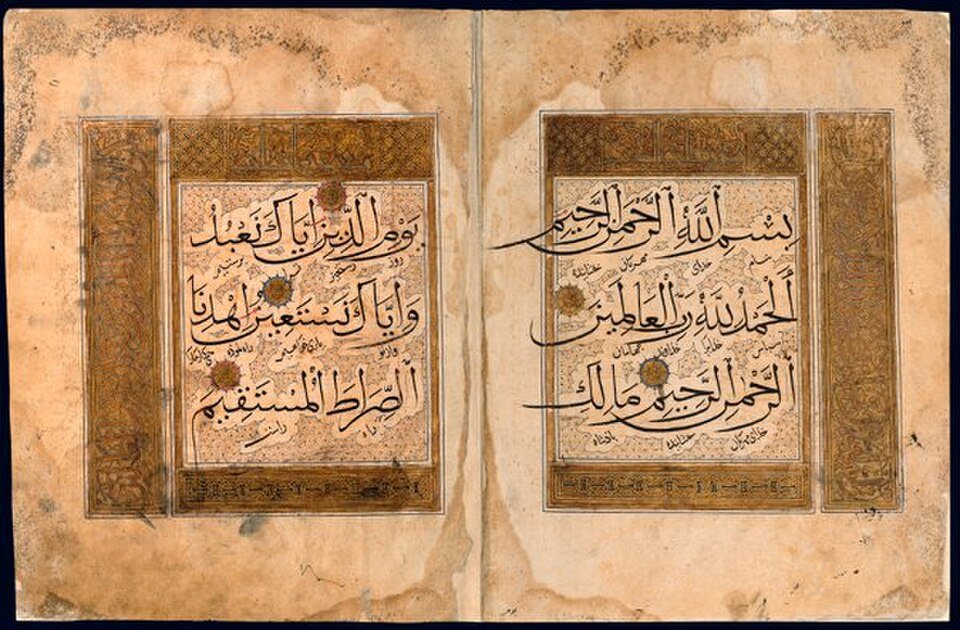
Al-Tabari authored Jami al-Bayan fi Ta'wil al-Qur'an, the earliest comprehensive traditional commentary on the Qur'an to survive complete, drawing on statements of the Companions and their successors while weighing conflicting reports and offering careful linguistic analysis of the verses — a work that became an essential reference for every exegete who followed. He also wrote Tarikh al-Rusul wal-Muluk, known as the History of al-Tabari, a universal history spanning from creation to his own era, and one of the most important sources for early Islamic history. Al-Tabari was known for his prodigious output, reportedly writing dozens of pages daily for decades.
- Authored Jami al-Bayan, the earliest surviving comprehensive traditional Qur'an commentary
- Wrote the History of al-Tabari, one of the most important sources on early Islamic history
- Combined exegesis, hadith, jurisprudence, language, and history in encyclopedic works
- Sustained a prodigious scholarly output across decades of writing and teaching in Baghdad
Al-Tabari died in Baghdad in 923 CE, leaving behind an immense scholarly legacy that is still studied and relied upon in Qur'anic exegesis and Islamic history today.