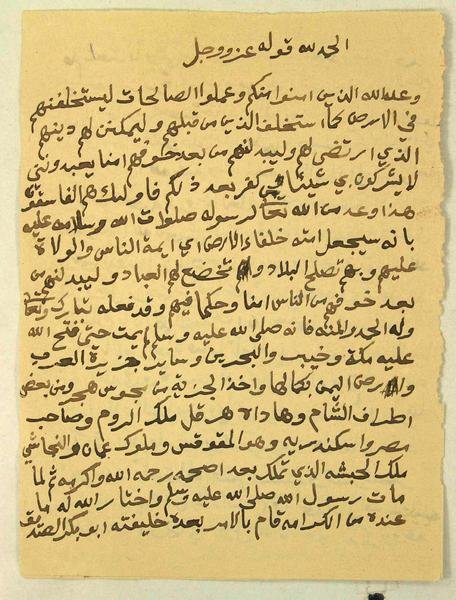
Isma'il ibn Umar ibn Kathir was born in the village of Busra near Damascus, and moved to the city after his father's death while still young, raised under the care of his older brother and educated by Damascus's leading scholars, including Shaykh al-Islam Ibn Taymiyyah, whose method of exegesis grounded in scriptural texts deeply influenced him. Ibn Kathir excelled in Shafi'i jurisprudence, hadith, and history, and headed several of Damascus's major religious schools.
His Commentary and Historical Encyclopedia
Ibn Kathir authored his famous commentary Tafsir al-Qur'an al-Azim, known as Tafsir Ibn Kathir, relying on the method of traditional exegesis — interpreting the Qur'an first through the Qur'an itself, then through the Prophetic Sunnah, then through the statements of the Companions and their successors — while critically scrutinizing the weak Israelite narrations that had crept into some earlier commentaries. This commentary remains today among the most widely read Qur'an commentaries in the Islamic world for the clarity of its style and the rigor of its method. Ibn Kathir also authored his vast historical encyclopedia Al-Bidaya wal-Nihaya, chronicling world events from creation through the prophets and past nations up to his own era, combining historical narration with critical analysis. Ibn Kathir lost his eyesight late in life but continued teaching and writing until his death.
- Authored Tafsir Ibn Kathir, among the most widely read Qur'an commentaries today
- Established the method of traditional exegesis and critiqued weak Israelite narrations
- Wrote Al-Bidaya wal-Nihaya, a comprehensive history from creation to his own era
- Headed major Damascus schools despite losing his eyesight later in life
Ibn Kathir died in Damascus in 1373 CE, leaving a scholarly legacy in exegesis and history that remains prominent in the contemporary Islamic library.