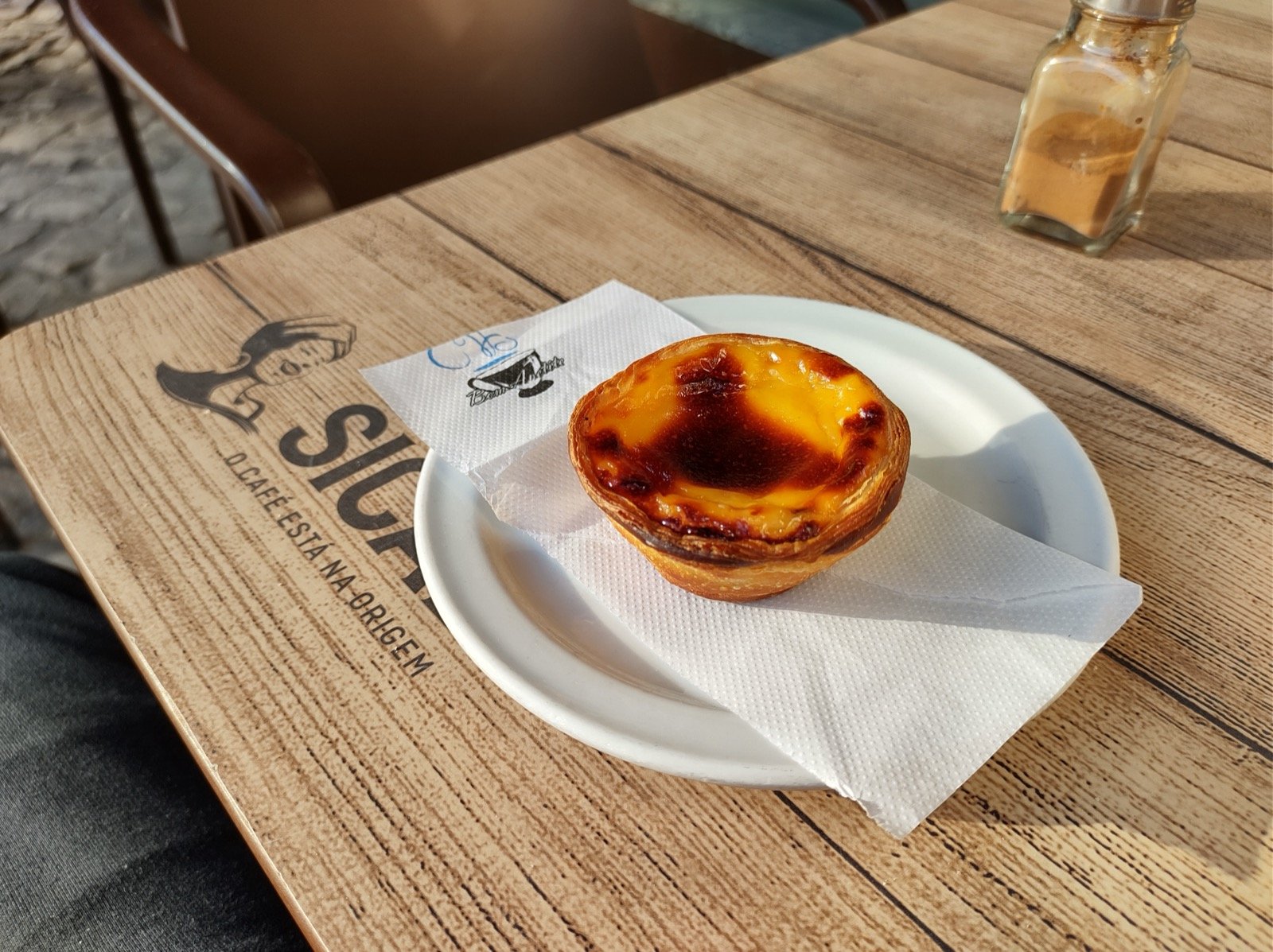
Small Portuguese pastries of flaky, crackly puff pastry filled with rich creamy custard, baked at very high heat until the tops develop signature caramelized black spots.
التحضير30 د
الطهي20 د
الحصص12
الصعوبةمتوسط
سعرات210
المقادير
خطوات التحضير
Roll out the puff pastry on a lightly floured surface and roll it tightly into a long cylinder.
Cut the cylinder into pieces about 2 cm thick.
Press each piece into the base and sides of muffin or tart tins, using water-dampened fingers to spread it into a thin, even layer covering the whole mold.
Refrigerate the lined molds while preparing the filling.
In a saucepan, mix the flour with a little milk until dissolved with no lumps, then add the remaining milk with the lemon zest and cinnamon stick.
In a separate pot, cook the sugar with the water until it reaches a boil and forms a light syrup (no colour needed).
Heat the milk mixture over medium heat until it starts to thicken slightly, then remove the lemon zest and cinnamon stick.
Gradually pour the hot sugar syrup into the milk mixture while stirring constantly.
Let the mixture cool slightly, then add the egg yolks and vanilla, whisking until fully combined.
Strain the custard through a fine sieve, then pour it into the pastry-lined molds, filling about two-thirds full.
Bake in a preheated oven at the highest possible temperature (about 250-260°C) for 12-15 minutes until dark scorched spots appear on top and the filling sets.
Let cool slightly before removing from the molds, and serve warm or at room temperature.
نصيحة
Very high oven heat is essential to achieve the signature scorched spots — do not lower it thinking it will burn the pastry. Pastéis de nata are traditionally served dusted with cinnamon and powdered sugar on top.
Pastel de nata is Portugal's most famous sweet, originating at the Jerónimos Monastery in the Belém district of Lisbon before the 18th century, where monks used large quantities of egg whites to starch their habits, leaving a surplus of egg yolks that were used in making sweets, among them these pastries. After the monasteries closed, the monks sold the recipe to a nearby sugar refinery that later became the famous «Pastéis de Belém» café, which still guards the original secret recipe today.
The secret to the authentic pastry lies in a laminated puff pastry, folded and rolled multiple times to create very thin layers that crisp up when baked, filled with a rich custard flavoured with vanilla and lemon zest, then baked at a very high temperature above 250°C for a short time, which gives the custard top its signature scorched spots, adding a light caramelized flavour without burning the pastry.

💬 التعليقات (0)
لا توجد تعليقات بعد — كوني أول من يعلّق!