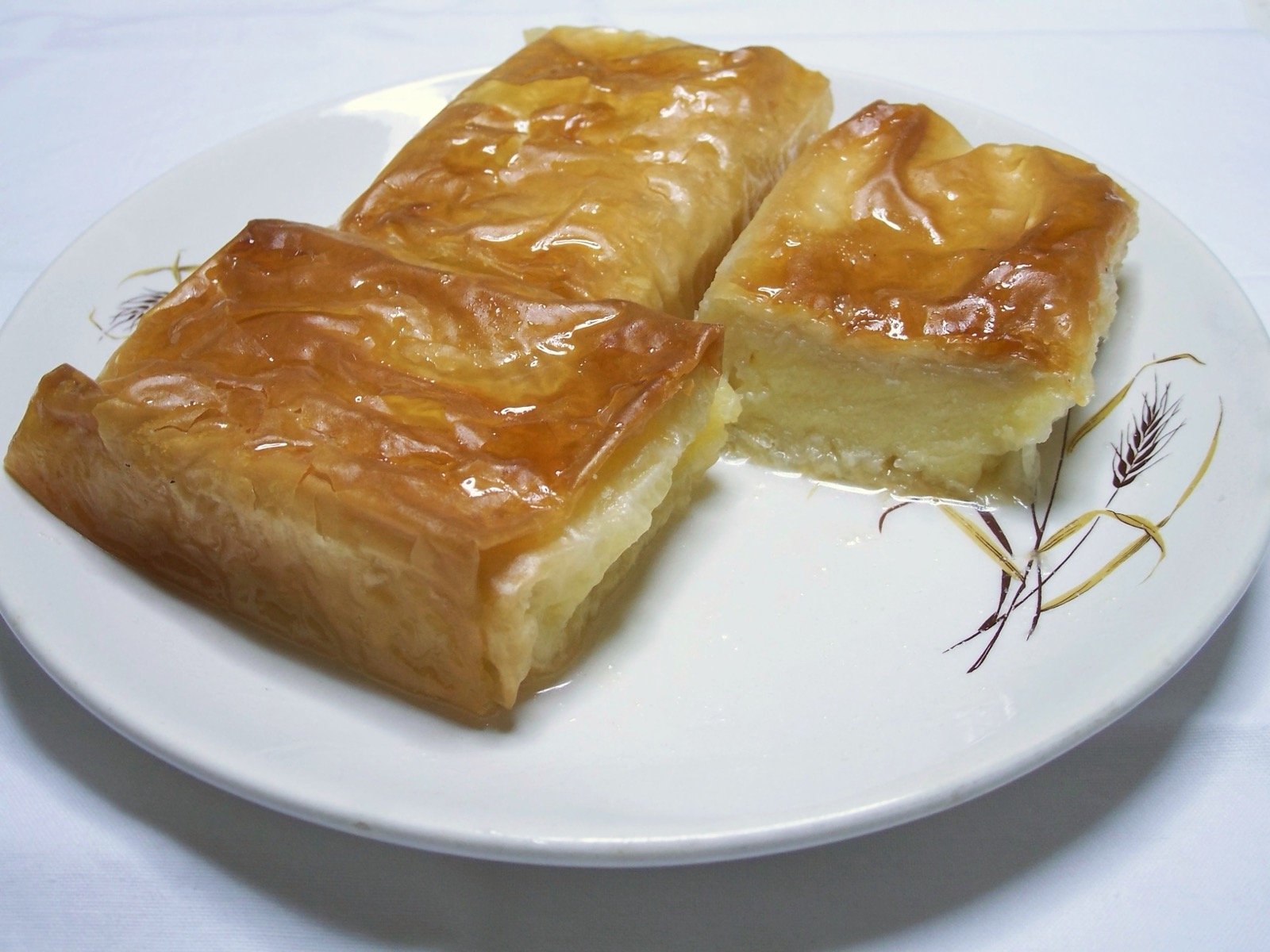
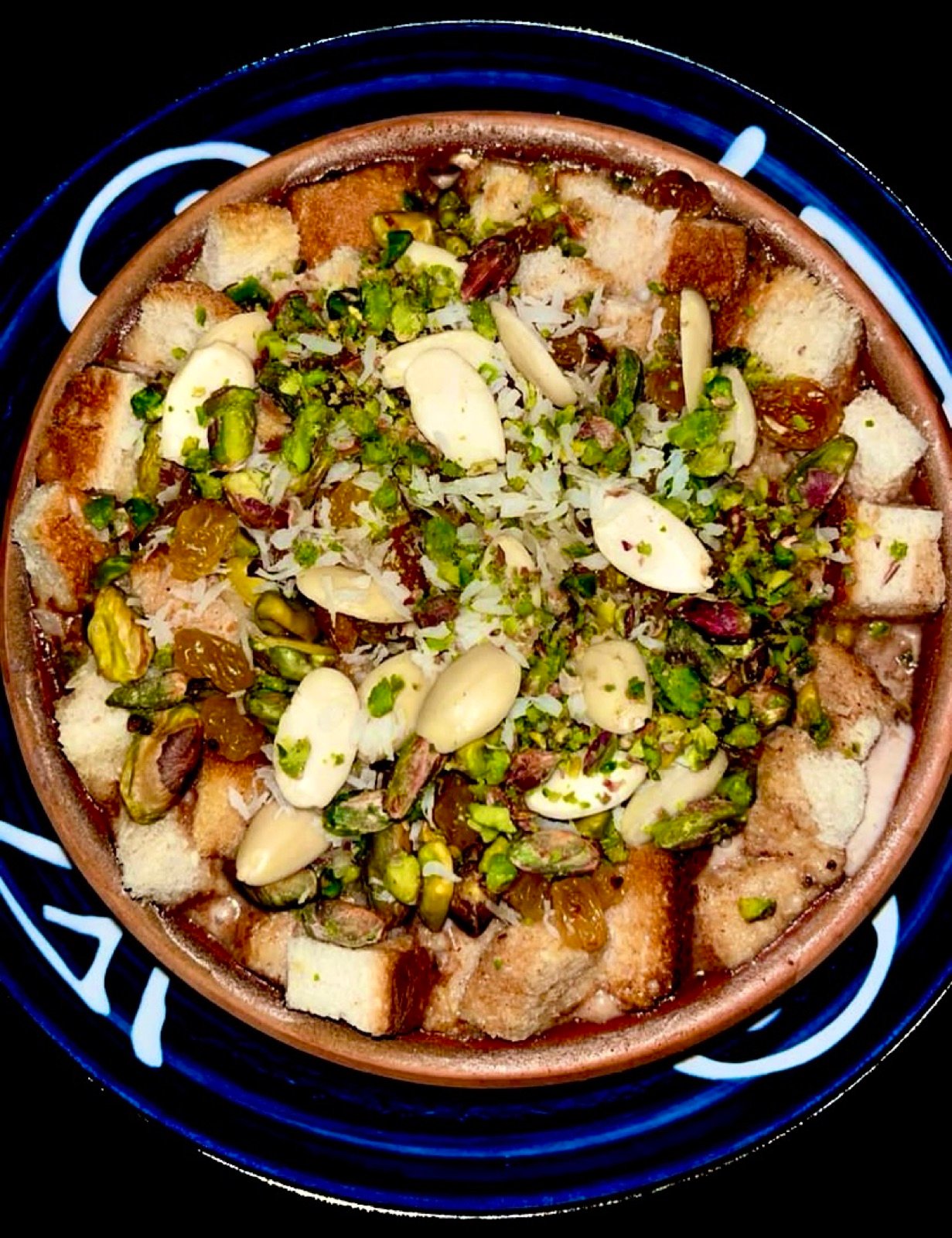
A Greek dessert of crisp layered phyllo pastry enclosing a lemon-scented creamy custard, soaked in fragrant sugar syrup right after baking.
التحضير30 د
الطهي45 د
الحصص12
الصعوبةمتوسط
سعرات320
المقادير
خطوات التحضير
Heat the milk with the sugar in a saucepan over medium heat until it just begins to simmer.
Gradually sprinkle in the semolina while whisking constantly to prevent lumps.
Continue cooking and stirring for 8-10 minutes until the mixture thickens to a thick custard consistency.
Remove from heat and add the butter, lemon zest, vanilla and a pinch of salt, stirring until the butter melts.
Let the mixture cool slightly, then gradually add the beaten eggs while stirring quickly to prevent curdling.
Grease a rectangular baking dish with melted butter.
Layer half the phyllo sheets in the dish, brushing each sheet with melted butter before adding the next, letting the edges overhang the sides.
Pour the custard filling over the phyllo layer and spread evenly.
Cover the filling with the remaining phyllo sheets, brushing each with butter, then fold the overhanging edges inward.
Score light lines on the surface with a sharp knife to make cutting easier later without shattering the crust.
Bake in a preheated oven at 180°C for 40-45 minutes until the top is golden and crisp.
Meanwhile, cook the syrup ingredients together for 10 minutes until slightly thickened, then let it cool.
Pour the cold syrup over the hot pastry as soon as it comes out of the oven, letting it soak in for at least an hour before slicing.
نصيحة
The golden rule for syrup-soaked pastries: cold syrup over a hot pastry, or vice versa, to ensure even absorption without becoming soggy. Cook the custard over gentle heat with constant stirring to prevent it sticking to the bottom of the pot.
Galaktoboureko literally means «milk pie» in Greek, a traditional dessert that combines two entirely contrasting textures: a very crisp outer shell of thin, butter-brushed phyllo layers, and an extremely smooth, creamy semolina custard filling. The dish stems from traditional Greek cuisine and is a popular sweet prepared for family gatherings and celebrations.
Its success relies on a principle common in Eastern Mediterranean desserts: baking the sweet first until cooked through and golden, then immediately drenching it in cold or warm syrup (while the pastry is hot) so the crisp pastry absorbs it without losing all its crunch. The filling is typically flavoured with lemon or orange zest to balance the custard's richness with a refreshing touch.



💬 التعليقات (0)
لا توجد تعليقات بعد — كوني أول من يعلّق!